
ERA launches to accelerate clean hydrogen for EU industrial competitiveness and energy independence
- Fewer than 7% of Europe's clean hydrogen projects have reached a Final Investment Decision (FID).
- Founding ERA members: Enagás, Fluxys, Fortum, Gasgrid Finland, Moeve, Nordion Energi, OGE, RWE Generation, SEFE, Stegra Boden and Thyssenkrupp, with Hydrogen Europe.
- Electricity represents about 70% of hydrogen production costs, cited as a primary competitiveness barrier.
- White paper urges extending RFNBO transitional rules beyond 2030, creating bankable demand, redesigning subsidies, de‑risking investment via ETS/CBAM revenues, and funding an EU hydrogen backbone with cross-border risk sharing.
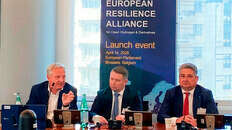
Launch
The European Resilience Alliance for Clean Hydrogen & Derivatives (ERA) was launched at the European Parliament in an event opened by European Commission Executive Vice‑President Teresa Ribera and co‑hosted by MEPs Andrea Wechsler and Nicolás González Casares; founding members are Enagás, Fluxys, Fortum, Gasgrid Finland, Moeve, Nordion Energi, OGE, RWE Generation, SEFE, Stegra Boden and Thyssenkrupp, in cooperation with Hydrogen Europe.
Purpose and approach
ERA is a CEO‑led, pan‑European initiative aiming to accelerate deployment of clean hydrogen and derivatives to support industrial decarbonisation, competitiveness and energy resilience; it will act through two core pillars: a unified policy voice and cross‑value‑chain coordination from production and infrastructure to demand and finance.
Market diagnosis
ERA’s white paper finds a large project pipeline but limited delivery—fewer than 7% of projects have reached Final Investment Decision—citing fragmented regulation, complex RFNBO rules, high electricity costs (about 70% of hydrogen production cost), low demand certainty and infrastructure uncertainty as primary barriers.
Policy recommendations
The paper calls for coordinated EU and national action across four areas: (1) create stable, bankable demand via immediate RED III transposition and harmonised implementation of ReFuelEU Aviation and FuelEU Maritime plus lead markets in hard‑to‑abate sectors; (2) simplify support frameworks and reduce electricity costs while prioritising large industrial projects; (3) de‑risk investments by safeguarding ETS/CBAM pricing, using revenues to boost competitiveness, extending RFNBO transitional provisions beyond 2030 and introducing state‑backed portfolio guarantees; and (4) scale funding and cross‑border planning for a European hydrogen backbone with EU risk‑sharing for early infrastructure investments.
Source: Moeve