
Gasunie positions the Netherlands as Europe’s CO₂ hub
- Porthos captures and stores about 2.5 MtCO₂/year and its onshore pipeline is sized for 10 MtCO₂/year, with a 15‑year project term equating to 37.5 Mt stored.
- Aramis is an offshore backbone with a ~200 km pipeline to three depleted fields and a transport capacity of 22 MtCO₂/year, targeting final investment in 2027 and operations in 2030.
- CO₂next is a ship import terminal (Gasunie, Vopak, Shell, TotalEnergies) for liquefied CO₂ that feeds the Aramis system for storage under the North Sea.
- Cross‑border links include the 200 km Delta Rhine Corridor to the Ruhr (DRC) due ~2033 and the Delta Schelde CO₂nnection to Zeeland/Antwerp due 2031–2032, with a Moerdijk hub merging streams.
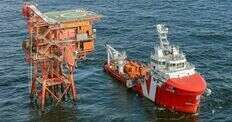
EU targets and role of CCS
European industry must cut emissions by 55% by 2030 (vs 1990), by 90% by 2040 and reach climate neutrality by 2050. For steel, cement, chemicals and refining, large‑scale carbon capture and storage (CCS), alongside electrification and renewable hydrogen, is essential; until green hydrogen is widely available, blue hydrogen or CCS remains the realistic route for many sectors.
Five linked projects
Porthos (Gasunie, Port of Rotterdam Authority, EBN) captures, compresses and stores CO₂ from Rotterdam industry with an annual storage of about 2.5 Mt and an onshore pipeline capacity of 10 Mt; its 15‑year project term implies 37.5 Mt total storage. Aramis (Gasunie, Shell, TotalEnergies, EBN) will add an offshore ~200 km pipeline to three depleted fields with 22 Mt/year transport capacity and aims for a financing decision in 2027 and operations in 2030.
CO₂next (Gasunie, Vopak, Shell, TotalEnergies) is a liquefied‑CO₂ import terminal that allows ship deliveries to feed the Aramis network for storage under the North Sea.
Cross‑border connections and requirements
The Delta Rhine Corridor will link Rotterdam to the Ruhr via a ~200 km pipeline (Gasunie to the border, OGE on the German side) and is expected around 2033; it will also include a hydrogen pipeline. The Delta Schelde CO₂nnection will link Zeeland and Antwerp to the Dutch network, meeting the DRC at Moerdijk so streams can merge for transport to Maasvlakte and on to Aramis (planned 2031–2032).
Deployment depends on guaranteed investments, clear ETS rules, stable subsidies and clarity on cross‑border CO₂ transport to keep European industry competitive while reducing emissions.
Source: Gasunie