
INERatec and Zeopore: meso‑zeolite hydrocracking for CO₂‑neutral e‑fuels
- INERATEC developed a scalable, low‑pressure modular hydrocracking stage to convert Fischer‑Tropsch waxes into drop‑in e‑Fuels and chemicals.
- Zeopore’s meso‑zeolite catalysts widen internal pores to improve diffusion, selectivity, activity and catalyst lifetime.
- Combined testing showed higher carbon utilization, near‑complete conversions, lower reaction temperatures and double‑digit reductions in hydrogen consumption.
- INERATEC says the integrated route lowers CAPEX and OPEX, raises sustainable aviation fuel yield and simplifies downstream processing.
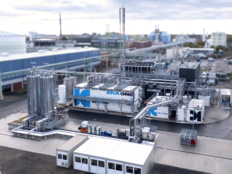
Collaboration overview
INERATEC and Zeopore have partnered to combine a proprietary low‑pressure hydrocracking stage with mesoporous zeolite catalysts to upgrade Fischer‑Tropsch waxes from Power‑to‑Liquid production into drop‑in e‑fuels and chemicals. The collaboration targets rapid, low‑risk scale‑up of sustainable fuel and chemical production.
Process and reactor design
INERATEC’s modular Power‑to‑Liquid plants couple reverse water‑gas shift and lower‑temperature Fischer‑Tropsch synthesis and use stacked reactor foils with fine channels for precise mass and heat exchange. The reactor design aims for energy efficiency, dynamic operation with fluctuating renewable power, and straightforward scalability.
Hydrocracking and catalyst role
The in‑house hydrocracking converts long‑chain FT paraffins into branched hydrocarbons with improved fuel properties. The low‑pressure approach claims higher e‑SAF yields and reduced CAPEX/OPEX versus high‑pressure alternatives. Zeopore’s meso‑zeolite catalysts provide engineered mesopores that ease molecular diffusion to active sites, increasing selectivity, activity and lifetime.
Demonstrated performance gains
Testing at INERATEC showed measurable efficiency gains: improved carbon utilization, near‑complete conversion, reduced catalyst deactivation, significantly lower reaction temperatures, double‑digit reductions in hydrogen consumption, fewer light‑gas byproducts and demonstrated industrial durability and recyclability. Both parties state these improvements support more economically competitive synthetic fuel production and faster industrial scale‑up.
Source: INERATEC