
INEOS-led Greensand opens EU's first full-scale CO₂ storage site
- First commercial phase capacity: up to 400,000 tonnes of CO₂ per year, with designed expansion potential of 4–8 million tonnes annually.
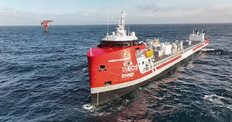
- CO₂ supply initially comes mainly from Danish biomethane plants and is liquefied, trucked to Port Esbjerg, shipped on Carbon Destroyer 1 and injected offshore.
- Storage target: Nini West reservoir, a depleted oil field ~250 km offshore and ~1,800 m beneath the seabed; reservoir integrity tested by GEUS and safety approved by DNV.
- Project led by INEOS Energy with partners Harbour Energy and Nordsøfonden; opening attended by King Frederik X, INEOS chair Sir Jim Ratcliffe and EU Energy Commissioner Dan Jørgensen.
What opened
Greensand, led by INEOS Energy with Harbour Energy and Nordsøfonden, has moved into commercial operation as the EU’s first full-scale permanent CO₂ storage facility. The opening in Esbjerg was officiated by King Frederik X and attended by industry and policy leaders including Sir Jim Ratcliffe and European Commissioner Dan Jørgensen.
Capacity and sources
In its first commercial phase Greensand can store up to 400,000 tonnes of CO₂ annually, with infrastructure designed to expand toward an expected 4–8 million tonnes per year as demand grows. INEOS will source CO₂ primarily from Danish biomethane plants to establish the CCS value chain while capture projects across industry scale up.
Value chain and site details
Captured CO₂ is liquefied, delivered by truck to a dedicated CO₂ terminal at Port Esbjerg, loaded onto Carbon Destroyer 1—the EU’s first purpose-built CO₂ carrier—and injected into the Nini West reservoir, a depleted oil field about 250 kilometres offshore and approximately 1,800 metres beneath the seabed. The reservoir’s integrity was tested by GEUS and Greensand has received safety approval from DNV.
Context and outlook
Project leaders say Greensand moves Europe from demonstration to deployment, enabling industry to reduce emissions while maintaining production. Greensand positions itself against EU capture targets (50 million tonnes by 2030; 250–280 million tonnes by 2040) as part of the infrastructure needed for wider CCS scale-up across Europe.
Source: INEOS