
EEW Explores CO₂ Capture at Knapsack for Climate Goals
Key highlights
  • The CO₂ capture facility aims for a capacity of up to 300,000 tons per year.
  • The EBKW plant processes 320,000 tons of waste annually.
  • Partners include YNCORIS, SEFE, and OGE for CO₂ transport and storage.
  • 50% of the waste is biogenic, enabling potential negative emissions.

Project Overview

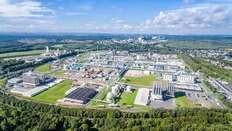
The EEW CaReS Knapsack project explores CO₂ capture from waste incineration to achieve climate neutrality. A feasibility study is underway, focusing on the development of a CO₂ capture facility with a capacity of up to 300,000 tons per year at the EBKW plant in Hürth, which processes 320,000 tons of waste annually.

Partnerships and Infrastructure

EEW collaborates with YNCORIS, SEFE, and OGE to cover the entire CO₂ value chain, including transport and storage. The project aims to create a cluster of emitters in the Cologne region, fostering infrastructure development for CO₂ transport and storage.

Potential for Negative Emissions

Approximately 50% of the waste processed is biogenic. Capturing and storing this CO₂ could result in negative emissions, transforming waste-to-energy from a residual emissions source to a climate protection tool, contributing to Germany's climate goals for 2045 and beyond.

Political and Economic Considerations

The project's success hinges on political and financial support. Reliable political framework conditions are essential to trigger necessary investments and ensure the project's viability. The initiative highlights the importance of coordinated infrastructure expansion and regulation for decarbonizing waste treatment.

Source: EEW Energy from Waste

chemXplore Weekly

The week’s project milestones and project news from the chemical industry, free every Wednesday.

Free. One email a week. Unsubscribe any time.

Related articles

2 September 2025
matterr to Build Depolymerisation Plant at Chemiepark Knapsack

A new plant will convert PET waste into reusable materials, supporting a fossil-free, circular economy at Chemiepark Knapsack, with operations starting in 2026.

14 April 2026
thyssenkrupp-backed European Resilience Alliance launches to scale clean hydrogen deployment

CEO-led alliance white paper diagnoses bottlenecks—fragmented rules, high power costs, weak demand certainty—and urges bankable demand, simpler support, de-risk finance and cross-border infrastructure

14 April 2026
ERA launches to accelerate clean hydrogen for EU industrial competitiveness and energy independence

CEO-led alliance published a white paper urging governments to boost demand certainty, lower electricity costs, simplify RFNBO rules, de-risk finance and fund a hydrogen backbone to speed FIDs.

16 July 2026
Gasunie positions the Netherlands as Europe’s CO₂ hub

Five connected CCS projects (Porthos, Aramis, CO₂next, DRC, DSC) will capture, transport and store CO₂ under the North Sea and link industry across the Netherlands, Belgium and Germany.

10 June 2026
EBN, Eni, Gasunie, OGE, Shell and TotalEnergies sign MoU on Delta Rhine Corridor CO₂ pipeline

Cross-border CO₂ pipeline to link North Rhine‑Westphalia industrial clusters to Dutch North Sea storage; target operation 2033 with initial Dutch sections in 2032.