
Topsoe and Sasol license G2L SAF technology to Allied Biofuels for Uzbekistan plant
- Topsoe and Sasol signed a licensing and engineering agreement to deliver eSAF and bio‑SAF technology for Allied Biofuels’ Khorezm facility.
- The facility is expected to produce approximately 300,000 tonnes of eSAF and SAF annually as a primary product.
- The project is part of a US$6.1 billion integrated development that will generate more than 400,000 tonnes of aviation fuel in total.
- Final investment decision is expected in 2027, with full‑scale commercial operations targeted for 2030.
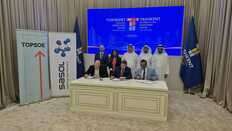
Deal scope
Topsoe and Sasol will provide a core technology licence, engineering design package and technical services to Allied Biofuels for an eSAF and bio‑SAF production facility in Uzbekistan’s Khorezm region. The agreements cover an integrated G2L™ pathway combining Topsoe’s SynCOR™ and Sasol’s Fischer‑Tropsch (FT) technologies.
Technology and feedstocks
The plant will use the SynCOR™ autothermal reforming and Sasol FT conversion to produce high‑quality SAF from multiple feedstocks, including gasified biomass, green hydrogen and captured CO2, enabling a flexible eSAF and bio‑SAF production route under a Single Point Licence.
Capacity, cost and timeline
The Allied Biofuels facility is targeted to produce about 300,000 tonnes of eSAF and SAF annually and sits within a US$6.1 billion integrated clean fuels development expected to deliver over 400,000 tonnes of aviation fuel in total. A final investment decision is expected in 2027, with full commercial operations targeted for 2030.
Market context
The project is positioned to serve domestic, regional and international aviation markets amid growing SAF demand and regulatory pressure, such as the EU ReFuelEU Aviation rules that set eSAF supply targets for 2030 and beyond.
Source: Topsoe