
Siemens Energy and Air Liquide open Berlin gigawatt electrolyzer factory

Key highlights
  • The Berlin factory starts with annual production capacity of 1 GW, with plans to reach at least 3 GW by 2025.
  • Around €30 million was spent on production lines covering 2,000 square metres.
  • The factory will produce PEM electrolyzer stacks, with final assembly planned closer to project sites.
  • The Normand’Hy project in France, a 200 MW electrolyzer under construction, is expected to avoid 250,000 tonnes of CO₂ emissions annually.
Related projects For subscribers
Milestones, plant data, involved companies (owners, investors, licensors, contractors) and news — kept up to date.
Air Liquide Normand'Hy 200 MW PEM Electrolyzer at Port-Jérôme · France
Commissioning & Start-up
2017-06
2018-04-01
2021-10
2022-03
2022
~2026
~2026 Q4
European Energy Kassø e-methanol plant, Aabenraa · Denmark
Operational / Completed
2020
2022-01
2023-05-16
2024-12
2025-04
Siemens Energy and Air Liquide Berlin PEM Electrolyzer Stack Factory · Germany
Operational / Completed
2022-03-31
2023-11-08

Production capacity

Siemens Energy and Air Liquide have inaugurated a factory in Berlin for serial production of electrolyzer stacks. It has annual capacity of 1 GW, with the companies expecting to increase this to at least 3 GW by 2025, with potential for further expansion. The article estimates that 3 GW of installed electrolysis capacity could produce an average of 300,000 tonnes of green hydrogen per year when operated with renewable power.

Factory and technology

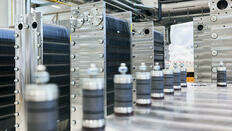
About €30 million was invested in new production lines covering 2,000 square metres at Siemens Energy’s existing Berlin site. The factory will produce stacks based on proton exchange membrane (PEM) technology, which can follow intermittent renewable power supply. Stack assembly for project installations will take place closer to project sites.

Projects and support

The first projects expected to receive stacks include Air Liquide’s Normand’Hy 200 MW electrolyzer in France, which is under construction and is expected to avoid 250,000 tonnes of CO₂ emissions annually. Siemens Energy is also working on electrolyzer projects in Kassø, Denmark, and FlagshipONE, Sweden, which will supply hydrogen for e-fuel synthesis for shipping.

Germany’s Federal Ministry for Research and Development supported research on the Berlin facility through the SEGIWA project, part of the H2Giga flagship project.

Source: Siemens Energy

chemXplore Weekly

The week’s project milestones and project news from the chemical industry, free every Wednesday.

Free. One email a week. Unsubscribe any time. See our Privacy Policy.

Related articles

3 April 2025
Clariant's MegaMax 900 Catalyst Powers European Energy's E-Methanol Plant Startup

MegaMax 900 catalyst successfully starts at Denmark's e-methanol plant, enhancing green methanol production with high stability and activity, supported by Clariant's technical team.

3 September 2026
ORLEN launches Baltic Energy Initiative with 13 regional partners

Regional platform mobilises 14 organisations to coordinate offshore wind, LNG/bioLNG, hydrogen, CCS, SMRs and infrastructure protection across the Baltic Sea region.

31 August 2026
Uniper advances NorthStarH2 into FEED with AFRY, Carbon Clean, Siemens Energy and Topsoe

Contracts worth >SEK100m launch ~1-year FEED for a 115,000 t/yr e‑methanol plant using renewable electricity and biogenic CO2; FID 2028, commissioning 2031.

10 October 2025
Suntory Launches Green Hydrogen Project at Hakushu Facilities in Japan

A large-scale P2G system in Japan begins producing green hydrogen to decarbonize Suntory's facilities, aiming for regional hydrogen use and carbon neutrality by 2026.

16 July 2026
Air Liquide invests >160M USD in Arizona for ultra‑pure gases for advanced chips

Arizona plant to supply ultra-high-purity gases for advanced-chip fab expansion using on-site low-carbon hydrogen production and CO2 capture.