
Petrobras to invest R$2.8bn in Amazonas for Urucu gas expansion and Transpetro fleet
- Petrobras and Transpetro will invest over R$2.8 billion in Amazonas by 2030, including R$2.5 billion to resume Urucu drilling and lay ~40 km of flowlines.
- The Urucu work targets an increase of ~4,400 barrels oil equivalent per day and supports natural gas (supplying ~65% of Manaus' power) and LPG output (~80,000 cylinders/day).
- Transpetro contracted 18 barges (R$303.5m) and 18 pushers (R$325.3m) to insource bunker logistics under the Mar Aberto fleet program, which plans 96 vessels and R$34.8 billion by 2030.
- From 2028 a Petrobras–Amazônica Energy partnership will add at least 100,000 m³/day of gas capacity, and the barges' construction in Amazonas is expected to create about 3,300 local jobs.
Investment package
Petrobras and Transpetro will invest over R$2.8 billion in Amazonas by 2030, including R$2.5 billion to resume Urucu drilling and lay ~40 km of flowlines, and R$628.8 million for 18 barges (R$303.5m) and 18 pushers (R$325.3m). The Mar Aberto fleet program foresees 96 vessels and R$34.8 billion in investments by 2030.
Urucu expansion
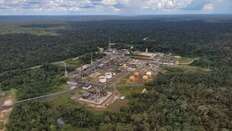
Urucu, in Coari, is Brazil's largest onshore oil province with average production of 105,000 boe/day; the new wells and flowlines target an incremental ~4,400 boe/day. Urucu gas supplies about 65% of Manaus' power and LPG output averages ~80,000 cylinders/day. From 2028 a Petrobras–Amazônica Energy partnership will add at least 100,000 m³/day of gas capacity.
Fleet and logistics
Transpetro will insource bunker logistics to reduce third-party spending (~R$300m/year) and expand inland navigation services; barges will be built in Amazonas and pushers in Santa Catarina. Barge construction is expected to generate roughly 3,300 direct and indirect jobs locally. Petrobras' regional operations support about 14,000 jobs and resulted in R$1.5 billion in tax collection and participations for Amazonas in 2025.
Vessel specifications
Barges (non‑propelled): ten at 3,000 GRT and eight at 2,000 GRT, up to 70m long, 16m wide, 4.5m draft, segregated tanks, shore power and solar-ready, to operate up to 6 knots when pushed; Pushers: up to 18.7m×9.2m×3.7m, 450 kW, 13 t traction and ~5 days autonomy, with technologies for precise maneuvering in restricted areas.
Source: Petrobras