
Infraserv Höchst and GEA commission carbon-capture pilot at Industriepark Höchst
- Infraserv Höchst commissioned a GEA‑supplied carbon‑capture pilot at the site’s sewage‑sludge incineration plant, rented for three months.
- A partial flow of flue gas is extracted from the chimney and treated by amine scrubbing; captured CO₂ is currently returned to the stack after testing.
- Measurements will record capture rate, CO₂ purity, scrubbing‑agent decomposition and energy demand to assess large‑scale feasibility, efficiency and costs.
- The project is largely funded by the EU IS2H4C programme; sewage sludge was chosen because part of the CO₂ is biogenic and suitable for CCU applications.
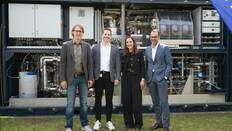
Pilot and objective
Infraserv Höchst has put a carbon‑capture pilot plant into operation at the industrial park’s sewage‑sludge incineration facility. Supplied by GEA and rented for a three‑month test period, the pilot will gather operational data to evaluate whether larger capture installations are technically and economically viable at the site.
Capture process and monitoring
The pilot extracts a partial flue‑gas stream from the incinerator stack and uses an amine‑water solvent to absorb CO₂; the solvent is subsequently heated to release the CO₂. Tests record capture rate, CO₂ purity, solvent decomposition and energy consumption. After treatment in the pilot the CO₂ is, for now, fed back into the chimney rather than routed for further purification.
Biogenic CO₂ and intended uses
The sewage‑sludge feed was chosen because part of the emitted CO₂ is biogenic and therefore considered climate‑neutral for carbon capture and utilization (CCU). Infraserv aims to supply captured CO₂ to startups and facilities that can combine it with low‑carbon hydrogen and electricity for syntheses and power‑to‑liquid fuels.
Context and funding
The pilot is largely financed through the EU IS2H4C project, which develops circular‑economy industrial symbioses across four European regions. Data from the test phase will inform decisions on scaling, costs and potential customer markets for captured CO₂ at Industriepark Höchst.
Source: Infraserv Höchst