Yara opens Europe’s largest industrial carbon capture facility at Sluiskil
- The Sluiskil plant can capture up to 800,000 tons of CO₂ annually from ammonia production.
- CO₂ will be liquefied, temporarily stored at Sluiskil, then transported by ship to Øygarden, Norway for permanent storage.
- Northern Lights will store the CO₂ approximately 2,600 meters below the seabed.
- With appropriate framework conditions the project is expected to capture and store about 12 million tons of CO₂ over 15 years.
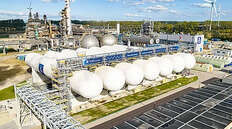
Inauguration and scope
Europe’s largest industrial carbon capture facility was officially inaugurated at Yara’s plant in Sluiskil, establishing the first complete cross-border value chain for capturing, transporting and permanently storing CO₂. Attendees included the prime ministers of Norway and the Netherlands and the European Commissioner for Climate, Net Zero and Clean Growth.
Capacity and logistics
The facility can capture and liquefy up to 800,000 tonnes of CO₂ per year from ammonia production. Liquefied CO₂ will be temporarily stored at Sluiskil and then transported by Northern Lights vessels to Øygarden, Norway for permanent storage.
Storage and timeline
Northern Lights will inject the CO₂ about 2,600 meters below the seabed. With the right framework conditions, the project is expected to capture and store approximately 12 million tonnes of CO₂ over the next 15 years, and captured volumes will avoid carbon taxation.
Strategic significance
The project is presented as a demonstration that large-scale industrial decarbonization is possible today and as an enabler of low-carbon value chains across agriculture, industry, energy and shipping, including low-carbon fertilizers, ammonia and maritime fuels. It also illustrates how shared, cross-border infrastructure can accelerate industrial decarbonization in Europe.
Source: Yara