
PRC Europe 2026 Brought Refining and Petrochemical Leaders Together in Amsterdam
- Delegates focused on bridging the gap between approved concepts and bankable delivery for refinery reconfiguration, hydrogen integration and low‑carbon molecule projects.
- Technical sessions addressed SAF production, hydrogen utilisation and refinery–petrochemical integration to boost energy efficiency and resilience.
- Panels highlighted circular feedstocks and advanced recycling—pyrolysis oil and hydroprocessing of mixed plastic waste, used tires and municipal waste into cracker‑ready feedstocks.
- PRC Europe 2027 is scheduled for 24–25 May in Vosendorf, Austria.
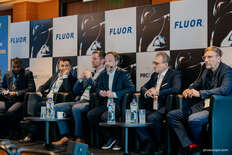
For two days in Amsterdam, conversations at the 10th anniversary edition of PRC Europe 2026 revolved around one central challenge facing the downstream sector: turning decarbonisation ambitions into technically and commercially workable industrial strategies. The Congress agenda examined the pressure on operators to move forward with transformation projects while maintaining reliability, investment discipline and long-term market position.
Hosted by Fluor, PRC Europe 2026 was supported in Regional Partnership with Lummus Technology, Sonatrach Raffineria Italiana S.r.l., Wood and Repsol. KBR joined as Technology Partner, alongside Industry Partners EFuel Alliance and the German-Dutch Chamber of Commerce.
Behind the technical discussions and decarbonisation targets, PRC Europe 2026 also explored the commercial realities shaping large-scale industrial delivery across the downstream sector. The opening executive panel addressed the growing implementation gap between concept approval and bankable delivery across refinery reconfiguration, hydrogen integration, circularity and low-carbon molecule development. Reflecting on the balance between sustainability targets and industrial reliability, Francesco Chiappini (Managing Director at Fluor) emphasised: “Future energy systems must deliver decarbonisation and energy security simultaneously to ensure sustainable progress.” The discussion further examined resilience, capital discipline, strategic alignment and execution certainty in a volatile investment environment.
Throughout both days, delegates joined panels, technical sessions and industry roundtables dedicated to SAF production, hydrogen utilisation, refinery integration and circular chemistry. Conversations also examined industrial energy efficiency, resilience strategies and process synergy across refining and petrochemical facilities. As Johann Lainer (Marketing Communication Manager Europe at Watlow) noted, “PRC is a valuable place to connect OEMs, EPCs and users of the downstream industry.”
Additional presentations focused on corrosion prevention, digitalisation and industrial optimisation strategies. The programme featured contributions from BASF, Shell, Honeywell Process Automation, Chevron Lummus Global, Technip Energies, KBR, Evonik, Alleima, TotalEnergies, Worley, McDermott, Sasol, NEUMAN & ESSER, Fluor and many others.
Among the technical highlights, Julien Grand (Near Zero Emissions Cracker Ecosystem Lead at TotalEnergies) addressed the role of refinery synergies in industrial decarbonisation, noting that “cross-asset collaboration and intelligent resource integration can accelerate the achievement of net zero objectives, while ensuring long-term industrial competitiveness.”
The first day of the anniversary edition concluded with a gala dinner at De Duif in Amsterdam, creating an atmosphere for informal networking, business conversations and relationship-building beyond the formal programme.
One of the final discussions of the Congress focused on the growing role of circular feedstocks and advanced recycling technologies in refining and petrochemicals. During the closing panel on maximising circular value, speakers examined pyrolysis oil upgrading, chemical recycling, contaminated waste stream treatment and scalable circular production pathways. Rajesh Sivadasan (Director of Technology at Chevron Lummus Global) stated: “Hydroprocessing technologies are opening new pathways for converting mixed plastic waste, used tires and municipal waste into high-quality cracker-ready feedstocks for circular petrochemical production.” The discussion also explored catalyst systems, refinery-ready process schemes and the commercial realities of scaling circular value chains across international markets.
The next edition of PRC Europe takes place on 24-25 May 2027 in Vosendorf, Austria. Preparations are already underway as companies across the downstream value chain secure their place for another round of strategic partnerships, closed-door discussions and industry networking: https://sh.bgs.group/4c5