
Loop Industries selects BASF Industriepark Lausitz for first European Infinite Loop facility
- BASF Industriepark Lausitz in Schwarzheide, Germany, was selected as the site for the inaugural European Infinite Loop facility, led by Reed – Société Générale Group.
- The plant will produce 70,000 metric tons per annum of virgin-quality recycled PET and polyester fiber using Loop’s depolymerization technology.
- This is the second Infinite Loop facility globally and the first implemented under Loop’s capital-light licensed technology model; Loop received a €10 million upfront license payment.
- The project moves into engineering and permitting, with Loop expecting incremental engineering and license revenue beginning in 2026 and operation targeted by 2030.
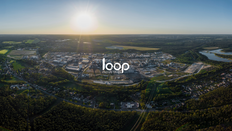
Project selection
Infinite Loop Europe selected BASF Industriepark Lausitz in Schwarzheide, Germany, as the site for its first European manufacturing facility. The project is led by Reed – Société Générale Group and is the second Infinite Loop facility globally.
Capacity and technology
The facility will use Loop’s proprietary depolymerization technology to produce 70,000 metric tons per annum of virgin-quality recycled PET and polyester fiber made from 100% recycled content, addressing supply needs for food-grade and pharmaceutical applications.
Commercial model and financials
This is the first deployment under Loop’s capital-light licensing model established in December 2024. Loop received a €10 million upfront license payment and expects to generate incremental engineering and license revenue starting in 2026 as the project advances through engineering and permitting.
Timeline and next steps
Following site selection, the project advances into engineering and permitting with modular construction intended to shorten timelines. The site is expected to be operational by 2030.
Environmental and regulatory context
The process is stated to avoid up to 5 tons of CO2 emissions per ton of PET produced compared with fossil-based alternatives. The facility is positioned to benefit from the European Commission’s 2025 pilot actions aimed at modernizing and strengthening the EU plastics recycling sector.
Source: loopindustries.com