
Regulation Essential for OCCS Investment in Maritime Decarbonization
- The report emphasizes the need for timely regulations to enable investments in OCCS technology.
- A pilot project on the Asia North-Europe trade route is proposed for large-scale OCCS application.
- The first pilot project in Rotterdam successfully unloaded 20 tons of liquid CO₂ from a ship.
- The Port of Rotterdam Authority is developing CO₂ storage and reuse chains within the port.
Legislative Framework for OCCS
A DNV report, commissioned by five major shipping companies, underscores the importance of a clear legislative framework to facilitate Onboard Carbon Capture and Storage (OCCS) and attract investments across the ship and LCO₂ offloading value chain. Despite the International Maritime Organization (IMO) delaying the adoption of the NZF, the urgency to develop decarbonization solutions remains high.
Key Focus Areas
The report identifies three main areas: the development of a liquid CO₂-chain, CO₂ abatement and downstream economic opportunities, and the regulatory framework. It highlights the need for investments in capture installations, transport capacity, and permanent storage facilities, contingent on timely regulatory support.
Pilot Projects and Feasibility
The shipping companies propose using the Asia North-Europe trade lane as a test environment for an OCCS corridor, given its high emissions and existing CO₂-storage projects in Rotterdam and Singapore. Pilot projects have demonstrated the technical feasibility, scalability, and safety of OCCS technology.
First Successful Pilot in Rotterdam
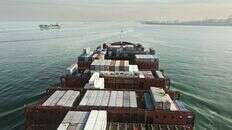
The first successful pilot project in Rotterdam involved the container ship Ever Top, which unloaded 20 tons of liquid CO₂. The Port of Rotterdam Authority is actively developing chains for CO₂ storage and reuse within the port industrial complex, with companies like Value Maritime, Wärtsila, and SMDERI equipping vessels with capture systems.
Source: Port of Rotterdam