
Exolum takes minority stake in SeaSeaS Amsterdam CO₂ export terminal
- Terminal designed to handle up to 3.5 million tonnes of CO₂ per year.
- Expected to become operational in 2030.
- Will receive CO₂ by vessel, rail, road or pipeline and export by sea to North Sea storage sites.
- Exolum acquired a minority stake and will contribute logistics and liquid‑product transport and storage expertise.
Transaction
Exolum has completed the acquisition of a minority stake in SeaSeaS Amsterdam, a project to develop a multimodal CO₂ export terminal at the Port of Amsterdam. The investment is intended to accelerate development of infrastructure to connect industrial emitters in the Amsterdam region and other parts of the Netherlands and Germany with permanent geological storage beneath the North Sea.
Terminal design and capacity
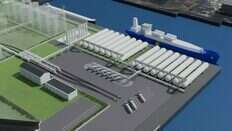
SeaSeaS Amsterdam is planned as Western Europe’s first open‑access CO₂ export terminal and will accept both biogenic and non‑biogenic CO₂. The facility is being designed to handle up to 3.5 million tonnes of CO₂ per year, receiving volumes by vessel, rail, road or pipeline and forwarding them by sea to North Sea storage sites. The terminal is expected to become operational in 2030.
Strategic rationale and Exolum’s role
Exolum’s involvement brings experience in developing and operating large‑scale logistics infrastructure plus capabilities in transporting and storing liquid products. Those competences are intended to support the development of a safe, scalable terminal that can serve companies of different sizes, including those without direct pipeline access.
Location and future uses
The Port of Amsterdam offers links to major industrial areas in the Netherlands and Germany, making it a strategic node for CO₂ aggregation and export. Initially the terminal will enable transport to permanent storage; it could later facilitate use of CO₂ as a feedstock for port‑area projects.
Source: Exolum