
Eni Advances Congo LNG Phase 2 Ahead of Schedule
- Phase 2 of Congo LNG starts early with Nguya FLNG, targeting first LNG cargo by early 2026.
- The project includes three platforms and Scarabeo 5 for gas treatment, with a capacity of 3 MTPA.
- Construction of Nguya FLNG was completed in 35 months, setting a new industry benchmark.
- Nguya FLNG and Scarabeo 5 incorporate decarbonization technologies for gas processing.
Project Overview
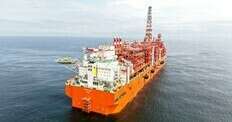
Eni has initiated Phase 2 of the Congo LNG project ahead of schedule, with the Nguya FLNG unit now operational. The project aims to export its first LNG cargo by early 2026.
Infrastructure and Capacity
Phase 2 includes three production platforms and the Scarabeo 5 unit for gas treatment and compression. The Nguya FLNG is designed for liquefaction and export, with a capacity of up to 3 million tonnes per annum (MTPA), equivalent to 4.5 billion cubic meters per year.
Execution and Efficiency
The project was completed in just 35 months, setting a new industry benchmark for execution speed and efficiency. This achievement was made possible through technological innovation and strong local stakeholder engagement.
Technological Advancements
The Nguya FLNG employs advanced technologies to reduce its carbon footprint and can process gas with varying compositions. The Scarabeo 5, converted from a drilling rig, incorporates decarbonization solutions, exemplifying circular economy and industrial reuse.
Source: Eni