
Vattenfall installs SSAB low‑emission steel at Juliusburg/Krukow solar park
Key highlights
- Location: Juliusburg/Krukow solar park in Herzogtum Lauenburg, Schleswig‑Holstein, covering ~74 hectares.
- Capacity: 80 MWp nominal, ~120 GWh/year estimated generation.
- Material: Vattenfall used SSAB Zero low‑emission steel produced from ~100% scrap for PV substructures.
- Impact: SSAB Zero reduces substructure CO₂ by 67%, from 460 t to 153 t.
Project overview
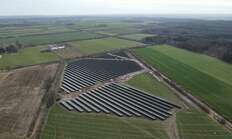
The Juliusburg/Krukow solar park in Herzogtum Lauenburg, Schleswig‑Holstein covers about 74 hectares and has a nominal capacity of 80 MWp, with estimated generation around 120 GWh of electricity per year.
Materials and emissions
On the Krukow section Vattenfall used low‑emission steel from SSAB, produced from almost 100% scrap, for PV mounting substructures; this reduces CO₂ for the substructures from 460 t to 153 t (a 67% reduction), cutting construction and supply‑chain emissions.
Context
The use of decarbonised structural steel is an example of reducing upstream emissions associated with building renewable generation by specifying lower‑emission materials for key components.
Source: Vattenfall