
thyssenkrupp nucera: Three priorities to turn Europe's hydrogen ambition into industrial reality
- Producing 1 kg of hydrogen requires roughly 50–55 kWh of electricity, making power prices the largest cost driver for renewable hydrogen.
- At €0.04/kWh electricity costs about €2/kg H2, while at €0.10/kWh it exceeds €5/kg H2, before electrolyzer and financing costs.
- thyssenkrupp nucera will supply 15 standardized 20 MW scalum units to the 300 MW Onuba project in Spain.
- The company is opening a company-operated assembly hub in Portugal and partnering with Bharat Heavy Electricals Limited in India to strengthen industrial capability and delivery.
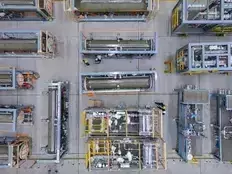
Competitive energy
Electricity is the dominant cost for green hydrogen: roughly 50–55 kWh are needed per kilogram, so power prices determine competitiveness. Electrolysis links renewable generation to industrial value by turning electrons into storable, transportable molecules and can add system flexibility by adjusting output to power availability. Delivering competitive hydrogen requires co-development of renewable power, grids, hydrogen pipelines, storage and industrial demand across borders.
Strategic choice
Electrolyzers are multi-decade investments whose true cost depends on lifetime performance, service and supply chains. Dependence on a single external source risks losing choice and the ability to respond to changing conditions. Resilience means maintaining European industrial capabilities while building international partnerships; examples include a new assembly hub in Portugal and collaboration with Bharat Heavy Electricals Limited in India.
Industrial execution
Policy and infrastructure uncertainty impedes final investment decisions; public action should reduce early‑market risks and unlock private capital rather than replace it. The 300 MW Onuba project, with 15×20 MW scalum units, illustrates how standardized, repeatable projects can scale the market but must become routine rather than exceptional.
Measure success differently
Success should be judged by investments unlocked, plants built and industrial value created, not by the number of announced targets.
Source: thyssenkrupp nucera