
PHWT pairs solar carport with sodium-ion storage
- Two sodium-ion battery cabinets provide 200 kWh of storage and 100 kW of charging and discharging power.
- The solar installation has around 237 kWp of capacity, including modules over 90 parking spaces.
- The carport was built in ten weeks during the semester break.
- PHWT estimates peak shaving will save €6,000–€7,000 a year on electricity.
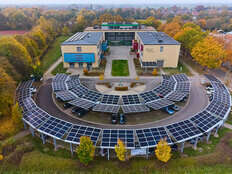
Solar generation and storage
PHWT opened a solar carport at its Diepholz campus in November 2026. The system combines around 237 kWp of solar capacity with two sodium-ion battery cabinets rated at 200 kWh and 100 kW of charging and discharging power. The carport’s glass-glass modules cover 90 parking spaces across around 1,150 square metres. Construction took ten weeks during the semester break.
The batteries store surplus solar electricity and supply it when campus demand rises. They also help cover peaks from laboratory equipment, including an injection molding machine. PHWT estimates peak shaving will reduce its annual electricity costs by €6,000 to €7,000.
Why sodium-ion
PHWT selected sodium-ion cells partly because sodium is widely available, unlike lithium, graphite and cobalt, which are concentrated in fewer producing countries. The university also cites performance across temperatures from −20 °C to 60 °C; at −20 °C, up to 90% of capacity remains available.
PHWT President Dennis De also points to safety. He says sodium-ion cells have higher thermal stability than lithium-ion cells and that reactions are less severe if a fault occurs.
Campus energy systems
The Diepholz campus also uses an ice-storage system for heating and cooling. A heat pump draws heat from a water tank, which freezes and is then used for cooling in summer.
Source: PHENOGY