
SK Innovation Q3 2026: KRW 28.77tn revenue, KRW 3.70tn operating profit
- Consolidated Q3 revenue KRW 28.77 trillion and operating profit KRW 3.70 trillion, up KRW 8.18 trillion and KRW 3.12 trillion YoY respectively.
- SK Energy posted operating profit of KRW 1.21 trillion, up KRW 554.6 billion QoQ on stronger export margins and higher utilization.
- SK Enmove delivered a record quarterly operating profit of KRW 1.09 trillion, up KRW 398.7 billion QoQ, and signed a long-term Group III base oil supply agreement with HF Sinclair.
- SK On reported revenue KRW 1.53 trillion and an operating loss of KRW 80.5 billion, while expanding North American ESS orders and securing LFP supply agreements with NeoVolta, L&F and POSCO Future M.
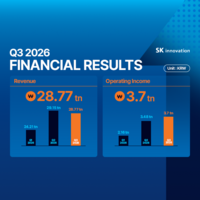
Q3 performance overview
SK Innovation reported consolidated Q3 2026 revenue of KRW 28.77 trillion and operating profit of KRW 3.70 trillion, marking the company’s highest-ever quarterly operating profit. Revenue fell KRW 383.4 billion QoQ while operating profit rose KRW 217.0 billion QoQ; both metrics improved significantly YoY.
Business drivers and subsidiary results
Stronger export margins from tightened global petroleum product supply and record lubricants profitability were primary drivers. SK Energy posted KRW 1.21 trillion operating profit on improved export profitability and higher utilization. SK Enmove achieved a KRW 1.09 trillion operating profit—exceeding its prior full-year record—in part due to sustained high base oil spreads and a Group III supply deal with HF Sinclair. SK Earthon began first crude production at Lac Da Vang (Block 15-1/05) in Vietnam. SK On’s underlying profitability improved despite an operating loss of KRW 80.5 billion, supported by cost reductions and expanded ESS orders plus LFP material supply agreements with NeoVolta, L&F and POSCO Future M.
Q4 2026 outlook
SK Innovation expects continued tight refining and petrochemical supply balances but notes market uncertainties including potential crude price drops. The company will prioritise optimized facility operations, cost reductions, securing ESS orders, stable LNG procurement (including Barossa volumes) and inventory management to mitigate volatility.
Source: SK Innovation