
Siemens to digitalize GalpH2Park 100 MW renewable hydrogen plant
- Siemens will deploy its Hydrogen Performance Suite (HPS) at Galp’s GalpH2Park 100 MW facility in Sines.
- HPS centers on a predictive Digital Process Twin using physics-based models and real-time optimization.
- The first phase aims to produce up to 15,000 tonnes of renewable hydrogen per year, cutting ~110,000 tonnes CO2e (Scope 1) annually.
- Siemens estimates the HPS can deliver up to 15% energy savings via smarter production scheduling and optimized energy procurement.
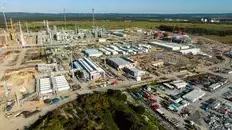
Project scope
Siemens and Galp are collaborating to digitalize GalpH2Park in Sines. The first project phase is a 100 MW electrolyser facility intended to produce up to 15,000 tonnes of renewable hydrogen per year, with an expected reduction of roughly 110,000 tonnes of CO2 equivalent per year (Scope 1).
Digital twin and software stack
Siemens will deploy its Hydrogen Performance Suite (HPS), anchored by a predictive Digital Process Twin built on physics-based modelling. The implementation includes an integrated software stack for process modelling, data analytics and real-time visualization to translate complex plant data into operational insights.
Operations and optimisation
By linking the digital twin to live plant data and external sources such as grid operators and energy markets, HPS provides end-to-end visibility for operators. That visibility supports smarter production scheduling and optimized energy procurement; Siemens projects up to 15% energy savings from the system.
Power sourcing and emissions impact
The plant will be powered by renewable electricity secured through long-term supply agreements and Galp’s own renewable generation. Combined with the digital optimisation, the project is positioned to contribute to Portugal’s and Europe’s industrial decarbonization targets.
Source: Siemens