
Sasol and partners commission 2 kW HySA PEM electrolyser in Sasolburg
- A 2 kW Proton Exchange Membrane electrolyser was commissioned at Sasol’s Research & Technology campus in Sasolburg.
- The unit was developed under the Department of Science, Technology and Innovation’s Hydrogen South Africa (HySA) programme with SANEDI and North‑West University.
- The electrolyser will be used for testing performance, system integration, skills development and operation under variable renewable electricity conditions.
- Stakeholders highlighted localisation, beneficiation of platinum group metals (PGMs), TRL maturation and the use of local resources including solar, wind and desalinated ocean water.
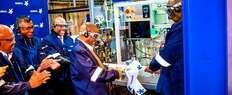
Commissioning
Sasol, the Department of Science, Technology and Innovation (DSTI), the South African National Energy Development Institute (SANEDI) and North‑West University commissioned a 2 kW Proton Exchange Membrane (PEM) electrolyser at Sasol’s Research and Technology campus in Sasolburg.
Purpose and testing
Developed through DSTI’s Hydrogen South Africa (HySA) programme, the electrolyser provides a platform for testing, learning and skills development in hydrogen production and system integration. The programme will assess the electrolyser’s performance and delivery under variable renewable electricity conditions.
Stakeholder comments
Minister Blade Nzimande stressed the link between critical minerals, beneficiation and green hydrogen, highlighting platinum group metals (PGMs) as central to future industries and local value capture. Sasol’s Sarushen Pillay said the project demonstrates public‑private‑academic cooperation to advance energy security and industrial capability, noting the unit was built by HySA in South Africa and will be tested at Sasol’s R&T campus. Professor Dmitri Bessarabov of NWU underlined localisation and industrial translation of HySA technologies to raise technology readiness levels through partnerships. SANEDI Board Chair Sicelo Xulu handed over the report and certificate of completion and said data from the electrolyser will support South Africa’s hydrogen economy using local knowledge and resources, including PGMs, solar, wind and desalinated ocean water.
Outlook
While at an early stage, the commissioning is intended to build knowledge, skills and technology platforms to support South Africa’s hydrogen economy, with potential to inform scaled green hydrogen production, industrial growth and lower‑carbon energy solutions.
Source: Sasol