
Rely Wins Contract for Engineering Studies on H4 Marseille Fos Green Aviation Fuel Hub
- 75,000 tons of e-SAF will be produced annually from green hydrogen and captured CO2 by 2030.
- The project uses a methanol-to-jet fuel synthesis pathway for decarbonizing aviation.
- Aligned with ReFuelEU, it aims for 10% e-SAF in aviation fuels by 2040.
- H4 Marseille Fos is a key e-SAF project in the Mediterranean, supported regionally.
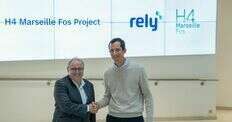
Project Overview
Rely has been contracted to assist H4 Marseille Fos in engineering studies for a sustainable aviation fuel (e-SAF) project in Fos-sur-Mer, France. The initiative aims to establish a European hub for hydrogen and e-SAF production, supporting decarbonization goals.
Production Details
The project plans to produce 75,000 tons of e-SAF annually by 2030, using green hydrogen from 300MW water electrolyzers and captured CO2. This aligns with Europe's ambition for sustainable aviation and reindustrialization.
Technological Pathway
A key feature is the methanol-to-jet fuel synthesis pathway, converting methanol from green hydrogen and captured carbon into jet fuel. This offers a scalable solution for decarbonizing aviation without modifying aircraft.
Regulatory Alignment
The project supports the ReFuelEU Aviation regulation, aiming to incorporate 10% e-SAF into aviation fuels by 2040, highlighting France and Europe's commitment to a cleaner aviation sector.
Strategic Location
H4 Marseille Fos is positioned as a leading e-SAF project in the Mediterranean, with connections to the European pipeline network, serving Southern and Eastern France, the Mediterranean basin, and other European airports. It is supported regionally as a driver for local industry decarbonization.
Collaboration and Support
The collaboration between Rely and H4 Marseille Fos, through H2V and Hy2gen, aims to develop a sustainable aviation fuel supply chain. Supported by Région Sud, Marseille Provence Airport, and Vinci Airports, the project exemplifies a collaborative approach to innovation and sustainability in aviation.
Source: Rely