
Covestro and Fraunhofer develop process to recover chemicals from car waste
- Fraunhofer UMSICHT’s Pyromat process produced pyrolysis oil with 62% BTEX by weight in laboratory tests and cut halogen content by up to 99%.
- The process is estimated to emit 1.1 metric tons of CO₂e per metric ton of BTEX, compared with 1.6–1.8 metric tons for steam cracking.
- The project aims to produce at least 50 kg of BTEX-rich pyrolysis oil with halogen levels below 30 ppm and reach continuous pilot operation at 10 kg per hour.
- CARBEX runs from September 2026 to August 2029; Germany could cut annual emissions by up to 640,000 metric tons of CO₂e if the process is widely adopted.
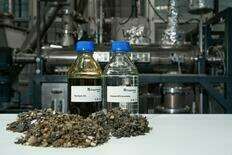
Recovering aromatics from automotive waste
Covestro, Fraunhofer UMSICHT and Carbon Minds are developing a process to recover benzene, toluene, ethylbenzene and xylenes (BTEX) from automotive shredder residue (ASR), which is largely incinerated today. Covestro will assess the recovered benzene and toluene for use in MDI and TDI production, while Carbon Minds will conduct a cradle-to-gate life-cycle assessment.
Pyromat process and emissions
Fraunhofer UMSICHT’s patented Pyromat technology combines pyrolysis and autocatalytic reforming. At around 500°C, pyrolysis coke acts as a catalyst and adsorbent, helping form aromatics and bind halogens. Laboratory tests achieved 62% BTEX by weight in the pyrolysis oil and reduced halogen content by up to 99%. Process emissions are estimated at 1.1 metric tons of CO₂e per metric ton of BTEX, nearly 40% below steam cracking.
Project targets and potential
The partners aim to produce at least 50 kg of BTEX-rich oil with halogen levels below 30 ppm and advance the process to continuous pilot operation at 10 kg per hour. The project runs from September 2026 to August 2029. Market studies estimate that widespread adoption could reduce annual German emissions by up to 640,000 metric tons of CO₂e. Recovered polyurethane could also contribute to recycled-content targets for vehicle plastics that the EU End-of-Life Vehicles Regulation will introduce from 2032.
Source: Covestro