
BASF converts Ludwigshafen acid chlorides and chloroformates to 100% renewable electricity credits
- BASF converted production of about 25 acid chlorides and chloroformates at Ludwigshafen to 100% renewable electricity credits starting in 2025.
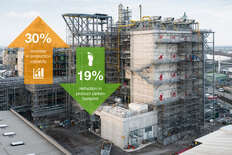
- The change reduced average product carbon footprint by 19% in 2025 (Scope 1–3.1) versus a non‑renewable scenario.
- A fully modernized Ludwigshafen asset increased chloroformate and acid chloride capacity by about 30%.
- BASF’s global annual capacity for chloroformates, acid chlorides and alkyl chlorides is ~60,000 t with production in Ludwigshafen (DE) and Yeosu (KR).
Conversion to renewable electricity
BASF’s Intermediates division switched the entire Ludwigshafen portfolio of about 25 acid chlorides and chloroformates to production using 100% renewable electricity credits from 2025, including upstream raw‑material processes.
Carbon footprint impact
The transition reduced average product carbon footprint (PCF) by 19% in 2025 versus a non‑renewable scenario, with similar levels expected in 2026; the reduction covers Scope 1, 2 and 3.1 and is calculated on 2025 volumes.
Capacity and supply
A fully modernized production asset at Ludwigshafen increased chloroformate and acid chloride capacity by roughly 30%, applying the PCF improvements to a larger volume while keeping product specifications and ordering processes unchanged—no recertification required.
Product range and methodology
BASF’s global annual capacity for chloroformates, acid chlorides and alkyl chlorides is about 60,000 t with sites in Ludwigshafen (DE) and Yeosu (KR); several products already have biobased or biomass‑balanced variants. TÜV Rheinland certified that BASF’s PCF methodology complies with ISO 14067:2018 and the TfS PCF guideline.
Source: BASF