
Cepsa to Upgrade Detergent Plant with Honeywell UOP Technology
Key highlights
  • The project will be completed in 2020.
  • The plant's capacity will increase by 50,000 metric tons to 250,000 metric tons of LAB per year.
  • Honeywell will provide catalysts, adsorbents, and basic engineering design.
  • The new ZDA-30 series catalyst features higher activity and selectivity.
Related project For subscribers
Milestones, plant data, involved companies (owners, investors, licensors, contractors) and news — kept up to date.
Moeve Detal LAB Revamp at San Roque · Spain
Operational / Completed
2018-04
2018-04
2021-05

Project Overview

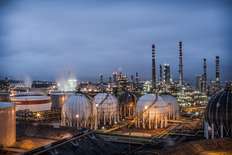
Honeywell announced that Cepsa will convert an alkylation unit using hydrofluoric acid to Honeywell UOP's solid bed Detal-Plus™ technology at its refinery in San Roque, Spain. The unit produces linear alkylbenzene (LAB), which is used to make various detergent formulations, including biodegradable household detergents.

Project Details

Honeywell will provide catalysts and adsorbents, basic engineering design, and other associated services for the complex. The project is scheduled for completion in 2020 and will be the world's first conversion of an HF alkylation unit to solid bed technology. With the conversion to Detal-Plus technology, the plant's capacity will increase by 50,000 metric tons to 250,000 metric tons of LAB per year.

Technological Advancements

The Detal-Plus technology, co-developed with Cepsa, is the first solid bed technology with the flexibility to produce LAB for various detergent formulations. The core of the process is Honeywell UOP's new ZDA-30 series catalyst, which features higher activity and selectivity, making it more energy efficient.

Integrated Processes

The Detal-Plus technology, combined with Honeywell UOP's Molex™, Pacol™, DeFine™, and PEP™ processes, forms an integrated and energy-efficient LAB complex. The Molex process provides an economical route to produce normal paraffins from kerosene. Pacol technology performs dehydrogenation of normal paraffins to olefins, and PEP technology handles the selective removal of aromatics.

Environmental Impact

Honeywell pioneered the manufacture of LAB in the 1960s, addressing the negative environmental impact of conventional detergents. Today, LAB from Honeywell UOP processes is the most widely used component in producing biodegradable detergents, emulsifiers, dispersants, wetting, and foaming agents.

chemXplore Weekly

The week’s project milestones and project news from the chemical industry, free every Wednesday.

Free. One email a week. Unsubscribe any time.

Related articles

31 July 2026
Moeve H1 2026: €1.2bn Clean CCS EBITDA; 69% of H1 capex to energy transition in Spain

Net income €458m, capex €605m and operating cash flow €762m; leverage fell to 1.2x; groundbreaking for 300 MW Andalusian Green Hydrogen Valley on Sept 17; Galp merger talks continue.

20 July 2026
Moeve Chemicals completes global verification for Low Carbon production

All production plants verified to supply Low Carbon products, enabling global customers to access verified, traceable lower‑carbon LAB and phenol alternatives.

25 November 2025
Moeve and Honeywell Enhance Renewable LAB Partnership

The collaboration scales bio-based LAB production for sustainable detergents, leveraging advanced technologies and Honeywell's licensing platform to meet industry demand.

30 September 2025
Moeve Projects €1.2bn Clean CCS EBITDA for 2025

Moeve's Q3 2025 shows strong cash flow, energy transition focus, and SAF initiatives, with net debt reduced and robust refining margins.

24 March 2025
Moeve Wins BASF Award for Circular Economy Excellence

Moeve's recycled flexitank project cuts polymer use by 18% and incorporates 17.5% recycled material, reducing carbon footprint and promoting sustainability in chemical transport.