
SEKISUI CHEMICAL and Velocys Partner on CO2-Based e-SAF Technology
- SEKISUI CHEMICAL and Velocys signed an MoU to develop e-SAF technology.
- The project combines CO2 to CO chemical looping and FT microchannel reactor technologies.
- The aviation industry aims to cut 65% of CO2 emissions using SAF by 2050.
- SEKISUI's technology achieves a 90% CO reaction yield; Velocys' FT technology offers high productivity.
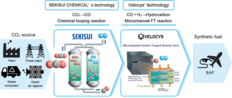
Partnership Overview
SEKISUI CHEMICAL and Velocys have signed a memorandum of understanding to advance electro-Sustainable Aviation Fuel (e-SAF) production technology. This collaboration aims to utilize CO2-derived synthetic fuel to support decarbonization efforts in the aviation industry.
Technological Integration
The partnership will integrate SEKISUI's CO2 to CO chemical looping technology with Velocys' Fischer-Tropsch (FT) microchannel reactor technology. This combination is expected to enable the efficient manufacture of synthetic fuels using CO2 as a feedstock.
Industry Context
The aviation sector contributes approximately 2.6% of global CO2 emissions. Sustainable Aviation Fuel (SAF) is seen as a key solution, with the potential to achieve 65% of the industry's CO2 reduction targets by 2050. Current SAF production relies on waste oil and biomass, but the anticipated demand increase necessitates the development of e-SAF from CO2 and renewable hydrogen.
Company Contributions
SEKISUI CHEMICAL has developed a chemical looping technology that achieves a high CO reaction yield of 90% or more. Velocys has over 20 years of experience in FT reaction technology, achieving productivity six to ten times higher than conventional methods. Their combined expertise aims to establish a new e-SAF manufacturing technology with high CO conversion rates.
Source: Velocys