
Siemens and CAPHENIA Partner to Scale Sustainable Aviation Fuel
- SAF can reduce CO₂ emissions by up to 80% compared to fossil kerosene.
- CAPHENIA's Plasma Boudouard Reactor operates at 1,500°C to convert bio-methane into synthesis gas.
- The process achieves over 86% energy efficiency by using released heat to preheat bio-methane.
- Siemens provides digitalization and automation solutions for CAPHENIA's technology.
Partnership Overview
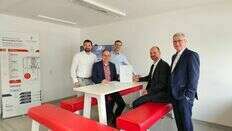
Siemens and CAPHENIA have partnered to scale the production of Sustainable Aviation Fuel (SAF). This collaboration focuses on utilizing CAPHENIA's plasma technology to convert bio-methane into synthesis gas, which can then be processed into SAF, renewable diesel, or chemical products.
Technological Innovation
CAPHENIA's Plasma Boudouard Reactor (PBR) is a unique 3-in-1 zone reactor that integrates three chemical reactions in one system. Operating at temperatures around 1,500 degrees Celsius, it efficiently splits bio-methane into synthesis gas without by-products and with minimal energy losses.
Efficiency and Sustainability
The process achieves over 86% energy efficiency by utilizing the heat released during the cooling of synthesis gas to preheat incoming bio-methane. This represents a significant improvement over conventional methods, contributing to the reduction of CO₂ emissions by up to 80% compared to fossil kerosene.
Global Rollout
Siemens, as the preferred automation and digitalization partner, will provide solutions to make CAPHENIA's technology industrially scalable. The goal is to develop a standardized concept that enables the global rollout of commercial production facilities, addressing the growing demand for SAF.
Source: Siemens