
Linde to Invest $1 Billion to Support Major U.S. Semiconductor Facility Expansion
- Linde will invest $1 billion to expand its on-site industrial gases complex in Phoenix to support a major semiconductor customer.
- The company will build, own and operate two new SPECTRA® air separation units, complementing three existing ASUs on site.
- Expansion increases supply of ultra-high-purity nitrogen, oxygen and argon to support two new semiconductor fabrication facilities.
- Linde LienHwa, the Taiwan JV, plans to invest about $800 million to supply ASUs and hydrogen units to the same customer at multiple Taiwan sites.
Woking, UK, July 31, 2026 – Linde (Nasdaq: LIN) today announced that it has been awarded a new long-term agreement to supply ultra-high-purity industrial gases to one of the world’s largest semiconductor manufacturers.
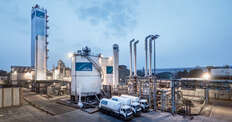
The agreement will support the expansion of the customer’s semiconductor manufacturing complex in Phoenix, Arizona. Linde will invest $1 billion to expand its existing on-site industrial gases complex in Phoenix, making the site one of Linde’s largest investments for an electronics customer globally.
Under the agreement, Linde will build, own and operate two new SPECTRA® air separation units (ASUs) and associated infrastructure. The new units will complement the three existing ASUs at the site.
The expansion will increase Linde’s supply of ultra-high-purity nitrogen, oxygen and argon to support two new semiconductor fabrication facilities. The new plants will use Linde’s leading-edge SPECTRA® technology to deliver the purity, reliability and operating efficiency required for advanced semiconductor manufacturing.
Separately, Linde LienHwa, Linde’s joint venture partner in Taiwan, has been selected by the same customer to supply industrial gases to new semiconductor manufacturing and advanced packaging facilities at multiple sites in Taiwan. Linde LienHwa plans to invest approximately $800 million to build, own and operate several ASUs and hydrogen production units.
“Advanced semiconductor manufacturing depends on the reliable supply of gases at exceptional levels of purity,” said Armando Botello, President Linde Gases, US. “As global demand for advanced semiconductors continues to increase, this investment demonstrates Linde’s ability to deliver the purity, reliability and scale our customers require. We are proud to support our customer’s expansion in the United States and Taiwan and to further strengthen our long-term global relationship.”
Linde is a leading global supplier of industrial and specialty gases to the electronics industry, supporting customers in the United States, Taiwan, South Korea and other markets. Its proprietary technologies and global operating capabilities enable the reliable supply of ultra-high-purity gases to one of the world’s most technologically demanding and rapidly growing industries.
About Linde Linde is a leading global industrial gases and engineering company with 2025 sales of $34 billion. We live our mission of making our world more productive every day by providing high-quality solutions, technologies and services which are making our customers more successful and helping to sustain, decarbonize and protect our planet.
Linde serves a variety of end markets such as chemicals & energy, food & beverage, electronics, healthcare, manufacturing, metals and mining. Linde’s industrial gases and technologies are used in countless applications, enabling space exploration and launch technologies, delivering ultra-high-purity and specialty gases for semiconductor manufacturing, providing life-saving medical oxygen and enabling clean hydrogen production and carbon capture to reduce greenhouse gas emissions. Linde also delivers state-of-the-art gas processing solutions to support customer growth, efficiency improvements and emissions reductions.
For more information about the company and its products and services, please visit www.linde.com