
Sumitomo-led consortium wins JOGMEC design contract for ship-based CCS at Mizushima
- Selected by JOGMEC under an FY2026 solicitation to design CO2 separation, capture, liquefaction, temporary storage and shipping facilities for Ship‑Based Advanced CCS.
- Target area is the Mizushima Industrial Complex in Kurashiki, Okayama, chosen for its concentration of hard‑to‑decarbonize emitters and industrial layout.
- Mizushima Cluster is expected to ship about 3.43 million tonnes of liquefied CO2 per year, the largest shipping volume among Japanese clusters under development.
- Consortium members (Sumitomo, Asahi Kasei, ENEOS, JFE Steel, Mitsubishi Gas Chemical, Mitsubishi Chemical) have signed a service agreement with JOGMEC to carry out the project.
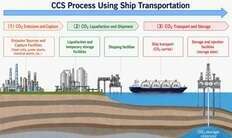
Contract and scope
Six companies were selected by the Japan Organization for Metals and Energy Security (JOGMEC) to perform commissioned design work for CO2 separation, capture, liquefaction, temporary storage and shipping facilities under the Ship‑Based Advanced CCS initiative. The selection followed a new public solicitation launched by JOGMEC in FY2026; the firms have entered a service agreement with JOGMEC to carry out the work.
Location and rationale
The project focuses on the Mizushima Industrial Complex in Kurashiki City, Okayama Prefecture, one of Japan’s largest industrial clusters where steel, chemical, automotive and energy sectors are concentrated. Several large‑scale emitters that are difficult to decarbonize through electrification or renewables are located there, making CCS a central solution for the area’s green transformation (GX).
Design focus and objectives
Using the industrial complex’s layout, the consortium will conduct design and feasibility studies to establish a CCS value chain that enables shared use of liquefaction, temporary storage and shipping facilities. The approach aims to cut costs through shared infrastructure and to create a model for decarbonization across the industrial complex rather than on an individual company basis.
Scale and participants
The Mizushima Cluster is expected to ship approximately 3.43 million tonnes of liquefied CO2 annually, which would be the largest shipping volume among the clusters currently under development in Japan. Participating companies are Sumitomo Corporation, Asahi Kasei Corporation, ENEOS Corporation, JFE Steel Corporation, Mitsubishi Gas Chemical Company, Inc. and Mitsubishi Chemical Corporation.
Source: MGC