
Clariant expands Daya Bay capacity and extends Exolit™ OP range for e-mobility
- CHF 100 million invested in Daya Bay expansion; second production line fully operational in November.
- Two new Exolit OP grades for PBT in e-mobility: Exolit OP 1242 (TP) with exceptional hydrolysis stability and Exolit OP 1266 (TP) with CTI 600 V after storage.
- Both grades meet UL 94 V-0 down to 0.4 mm at 15–20% dosing and target higher-voltage e-mobility systems (800 V and above).
- New halogen-free Exolit OP products provide ATO-free alternatives amid antimony price and supply volatility; Exolit AP 422 A is SVHC-free (<0.1% melamine) and can replace TCPP/TEP in PU foam.
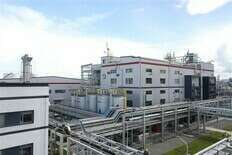
Capacity expansion
Clariant completed a CHF 100 million investment at its Daya Bay facility in China, bringing a second production line fully online in November. The added capacity is intended to meet growing demand for more sustainable flame-retardant solutions in Asia and globally, with emphasis on e-mobility and electrical & electronic applications.
New Exolit OP grades for e-mobility
Clariant introduced Exolit OP 1242 (TP) and Exolit OP 1266 (TP) specifically for polybutylene terephthalate (PBT) use in e-mobility. Exolit OP 1242 (TP) offers exceptional hydrolysis stability; Exolit OP 1266 (TP) maintains a comparative tracking index (CTI) of 600 V even after extended storage. Both meet UL 94 vertical test V-0 down to 0.4 mm at dosing levels of 15–20% and are aimed at higher-voltage architectures of 800 V and above.
ATO-free alternative and supply resilience
The halogen-free Exolit OP solutions are positioned as alternatives to traditional antimony trioxide (ATO)-based flame retardants, addressing recent antimony price spikes and supply chain volatility. The products are promoted as halogen‑free and ATO‑free options that do not require fluorinated polymers such as PTFE.
Exolit AP 422 A: regulatory and application profile
Clariant also developed Exolit AP 422 A, a halogen-free ammonium polyphosphate flame retardant with improved sustainability characteristics. It contains less than 0.1% melamine and is thus SVHC-free under REACH Article 31; it is targeted at insulation materials, composites and intumescent coatings, and can replace TCPP and TEP in polyurethane foam while offering improved powder flowability.
Source: Clariant