
Ambrian Energy & Messer win EU clearance for CarbonBridge CO₂ export terminal
- European Commission granted antitrust approval for the CarbonBridge joint venture.
- The Bremen CO₂ export terminal is planned to begin operations as early as 2031.
- Initial handling capacity is about 2.3 million metric tons per year, with plans to expand to ~4 million.
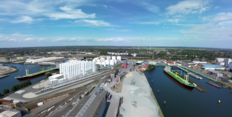
- Site: a 3-hectare Bremen property with rail connection and a berth for ships up to 30,000 metric tons for North Sea onward transport.
Antitrust approval and timeline
The European Commission has approved the Ambrian Energy–Messer joint venture CarbonBridge, clearing the way to develop Germany’s first CO₂ export terminal in Bremen. The terminal is scheduled to begin operations as early as 2031.
Capacity and services
CarbonBridge is planned to offer temporary storage, transport and loading of captured CO₂. Initial maximum handling capacity is approximately 2.3 million metric tons per year, with planned expansion to about 4 million metric tons annually.
Target industries and purpose
The terminal addresses the logistics gap for captured CO₂ from CO₂‑intensive industries such as cement, glass, steel and waste incineration, enabling recovered CO₂ to be moved from emitters to geological sinks for permanent storage and supporting industrial decarbonization.
Site and logistics
Ambrian Energy is contributing a three‑hectare site in Bremen with an existing rail connection for CO₂ transport and a port berth capable of handling ships up to 30,000 metric tons, facilitating onward shipment to North Sea storage sites.
Partners and roles
Ambrian Energy and Messer combine energy‑logistics and CO₂ recovery expertise. Messer will supply capture and processing know‑how and its ZeCarb “Carbon Capture as a Service” approach, while Ambrian provides the strategic site and transport links; the joint venture aims to deliver a flexible export option covering the full CO₂ value chain.
Source: Messer