Every project in the chemical industry, from announcement to start-up
What a company has committed to arrives as an announcement: a press release, a trade article, a line in a results call. Each one is findable. Together they are not a picture. There is no list of what is being built, no way to see which projects moved while you were busy, and no denominator — you cannot tell what you are missing.
An assistant will summarise any one of those announcements for you. It cannot tell you which ammonia projects in Europe passed their investment decision this year and have not started up, because that answer does not exist in any one source. It has to be kept.
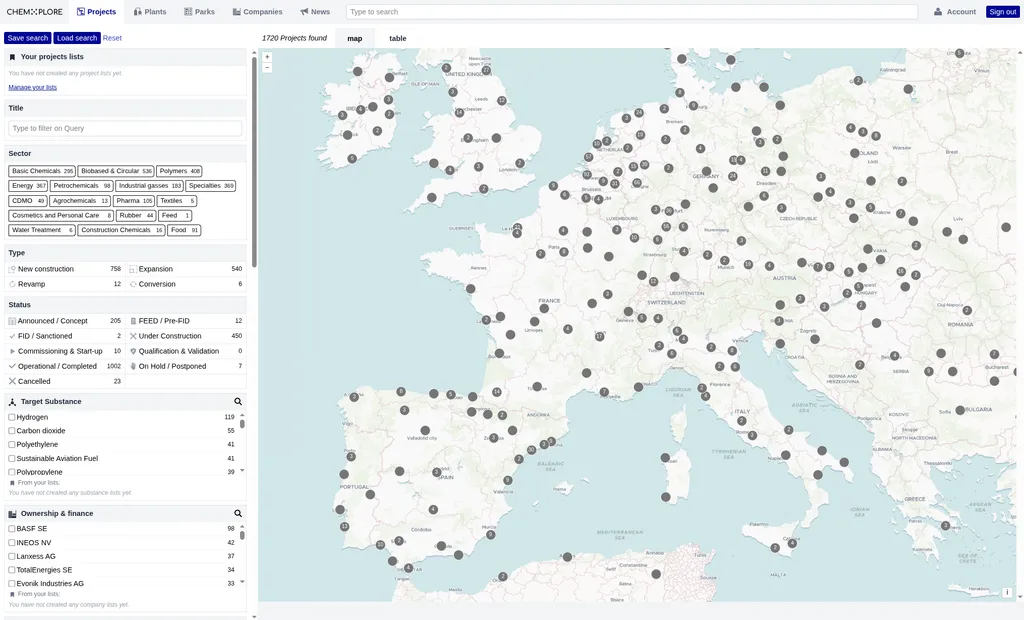
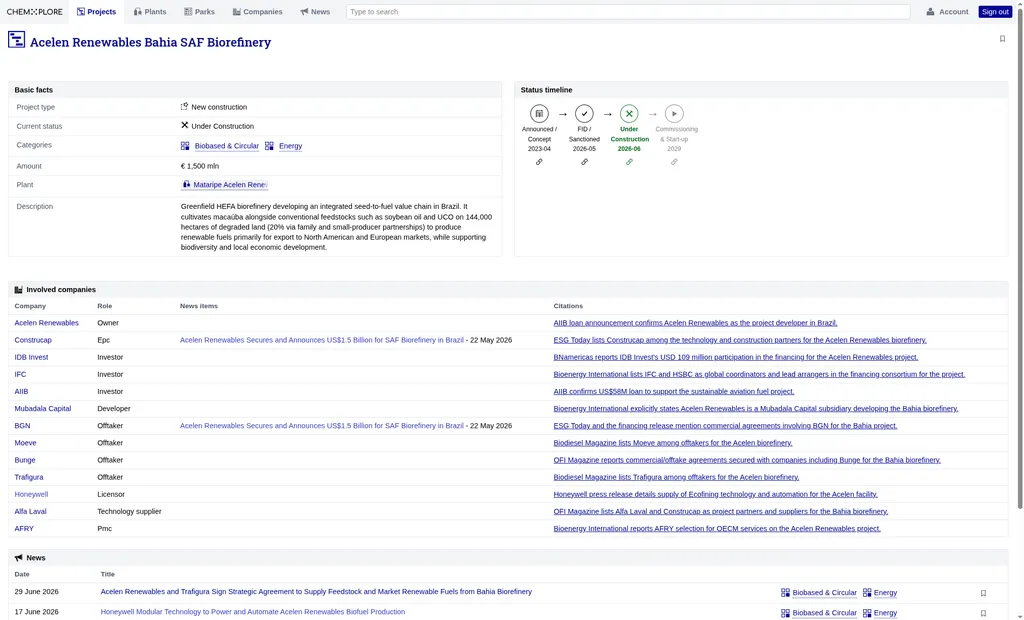
chemXplore keeps it. Every project is followed from the first announcement through engineering, the investment decision, construction and start-up, with the companies on it and the role each one holds, what it will make and at what capacity, the plant it belongs to — and the source behind every one of those facts. Today:
In depth across Europe since 2013, and a growing view of the rest of the world. How the record is made →
A fair question, and it has stopped meaning "ask a chatbot". You may already have a deep research run that does this weekly, or an agent of your own wired to search and scrape and write to a sheet. So do we: this record is filled by agents that read sources, extract what they say about a project and propose the change, with people ruling on it where accuracy decides the answer.
Which is why the answer is not that the technology falls short. It is that after the agent runs, the work starts — and that work is what a question like "which projects moved this quarter" actually rests on.
Build it yourself and within a month you own a maintenance job rather than an answer. What a subscription buys is the running already done — for thirteen years, and again this morning.
Which ammonia projects in Europe have passed the investment decision and have not started up yet — and when is each of them due?
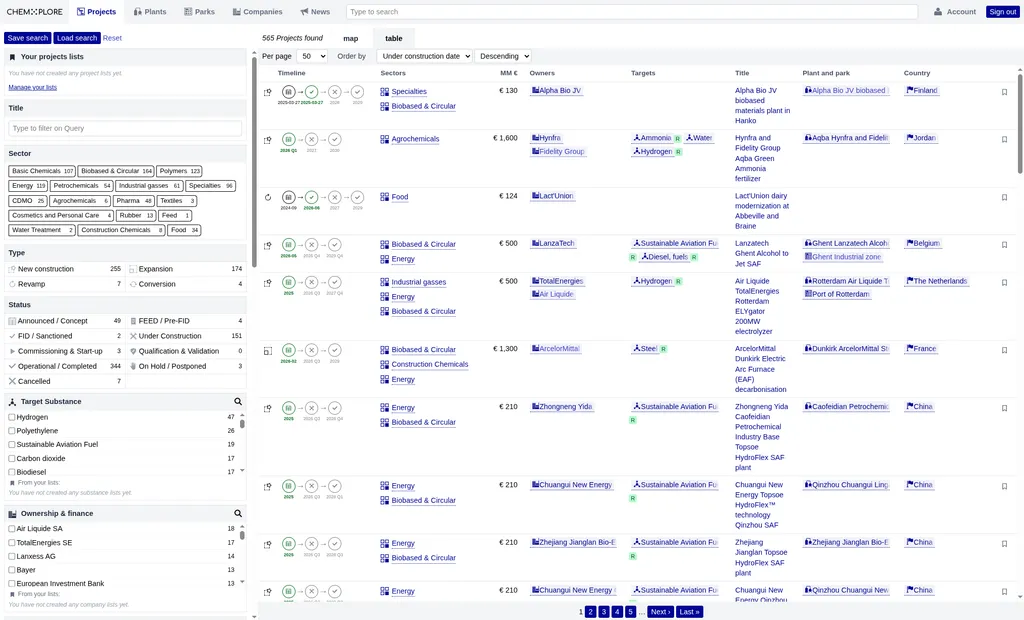
Pick the substance, the region and the phase. The count updates as you go, so you can see how big the answer is before you read it — and widen or narrow until it is the set you meant.
Each milestone carries its date and the source it came from, at the precision it was reported at. The companies are named with their roles, the capacity and investment are there where we hold them, and an expected date is marked as expected.
Save the search. When a project newly matches it — a new one appears, or one reaches the phase you asked about — an email tells you. The list is yours to map, refine and come back to.
Every Wednesday one project is shown in full on the public site, exactly as a subscriber sees it. This week's project →
One record, five ways into it, and the tools to work with what you find.
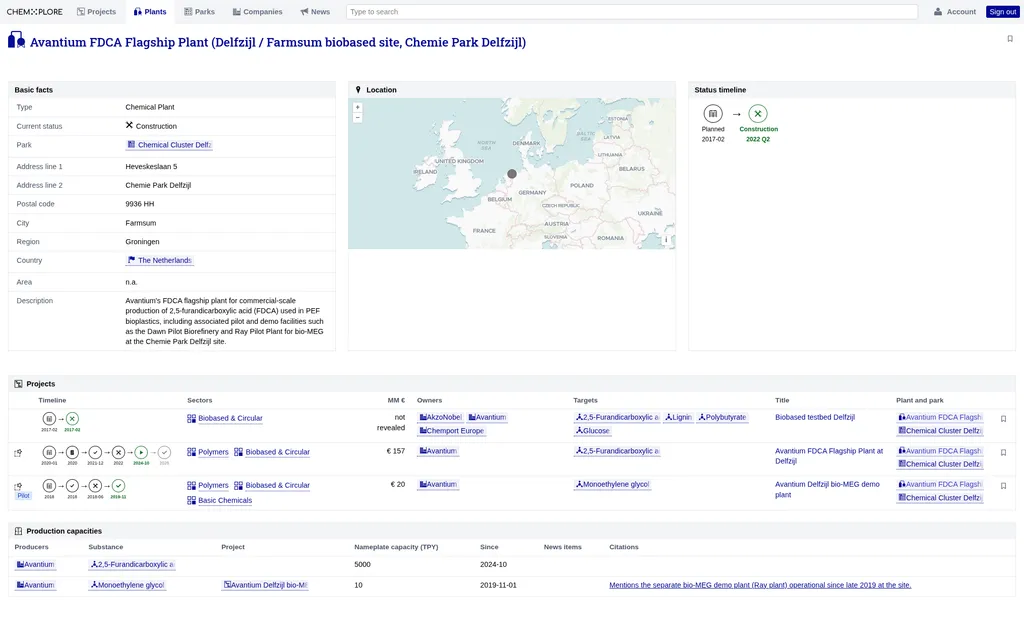
Every project we track: its phase and milestones with their dates, the companies on it and their roles, capacity, investment, and the plant it belongs to.
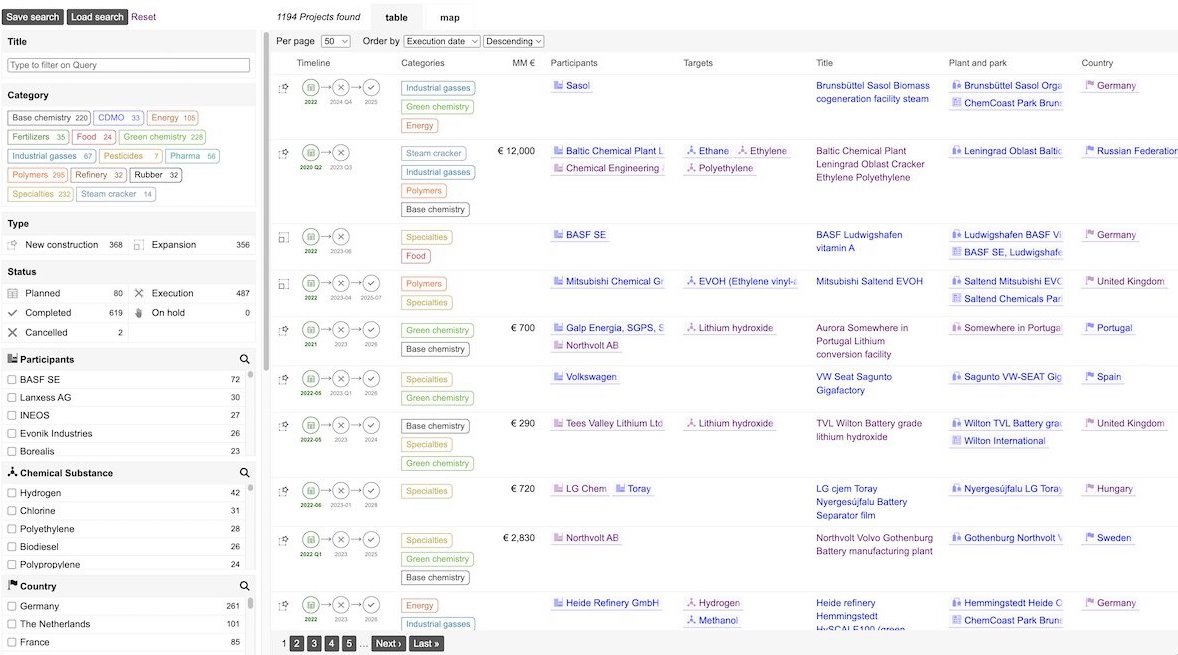
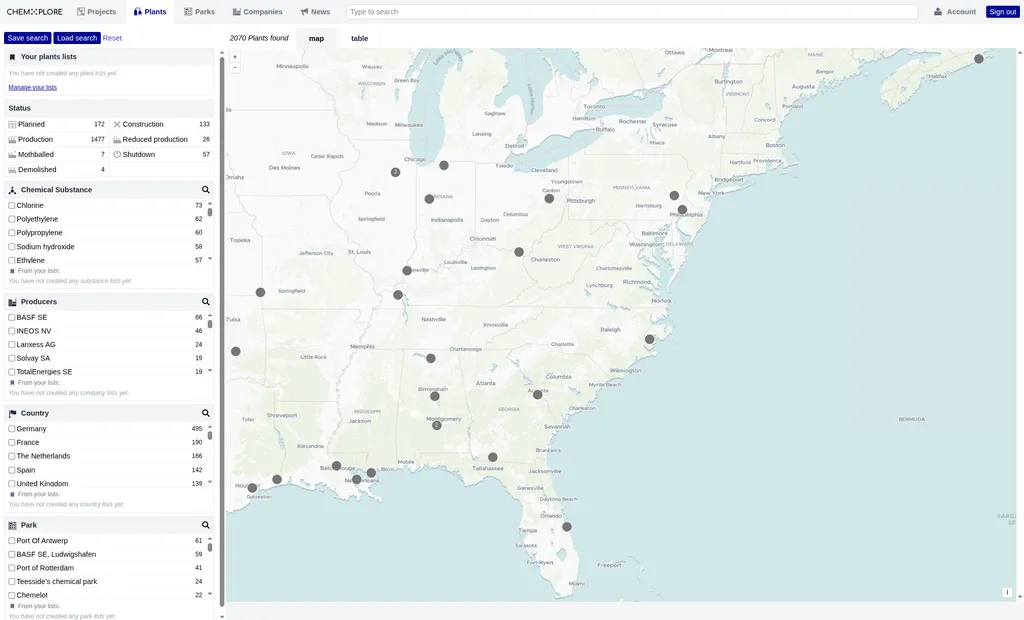
The installed base behind the projects — who owns and operates each plant, what it makes, and what has been built there.
What a company owns, operates, builds, licenses or supplies to, across the whole record.

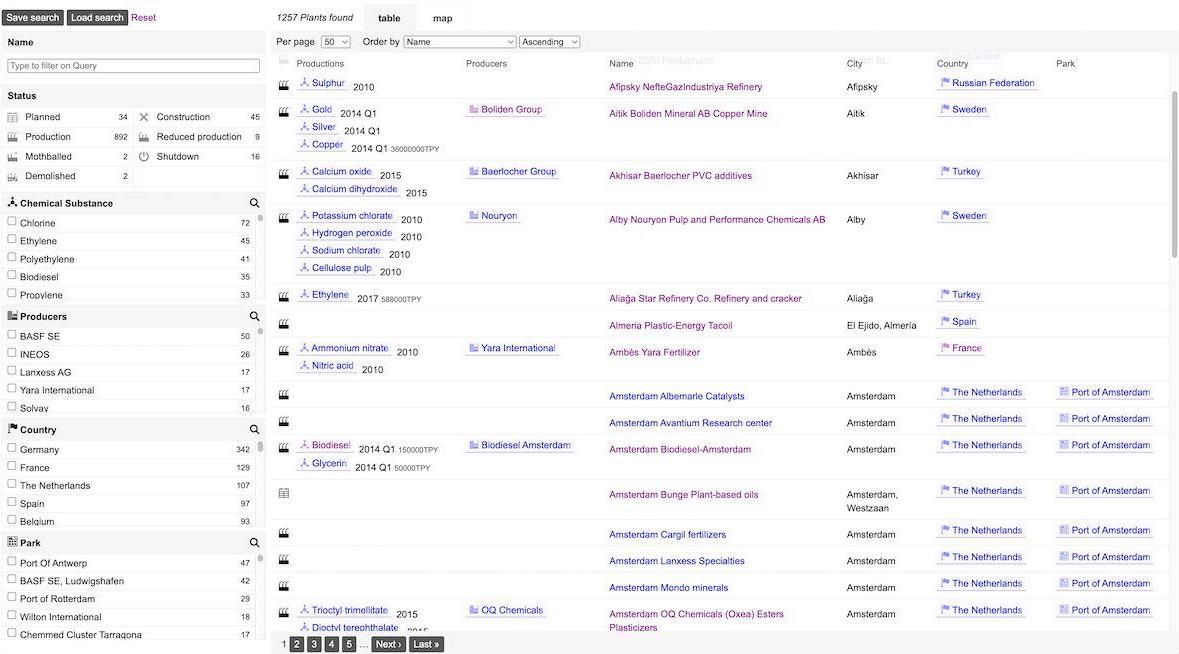
What is being built for a substance, who makes it today, and what capacity is due on stream.
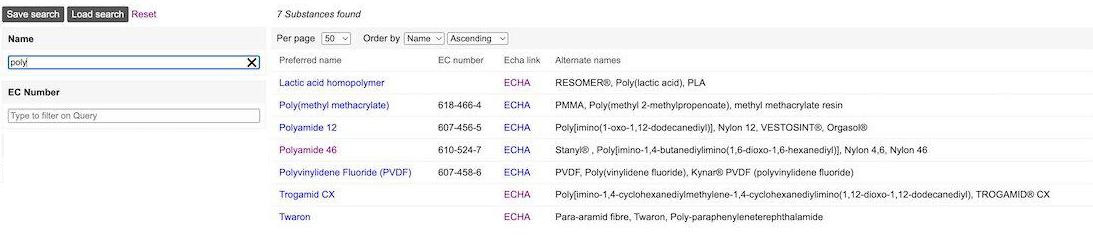
The sites themselves: the plants in them, the companies present, and the projects under way.
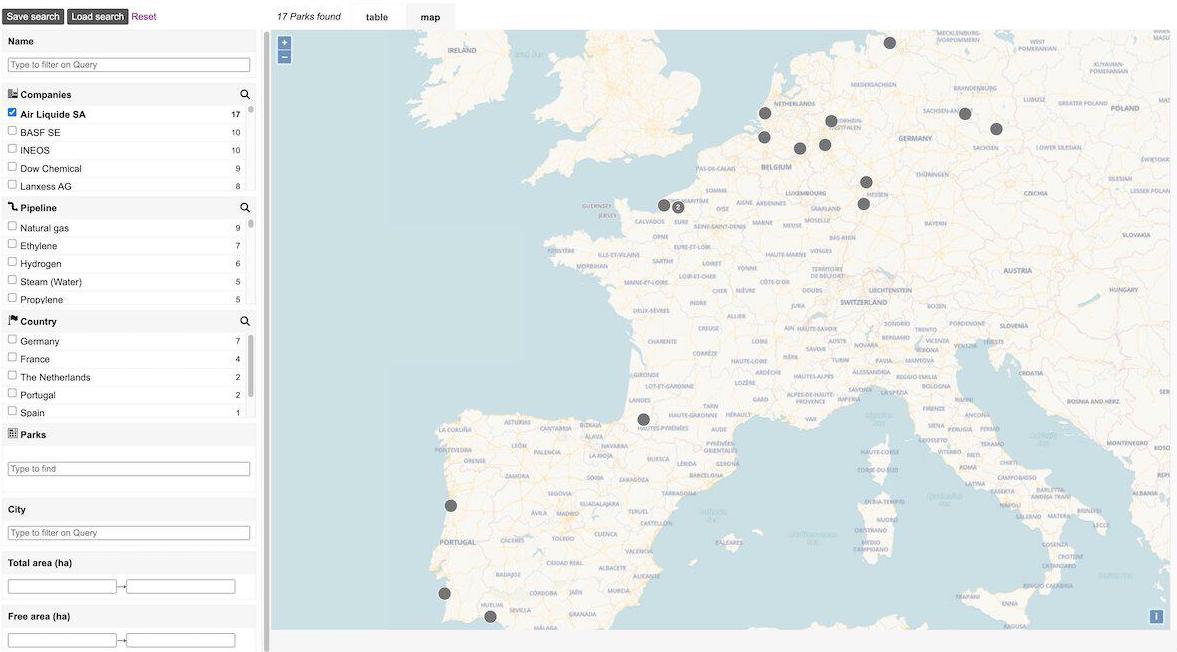
The articles behind the facts, linked to the projects, plants and companies they concern.
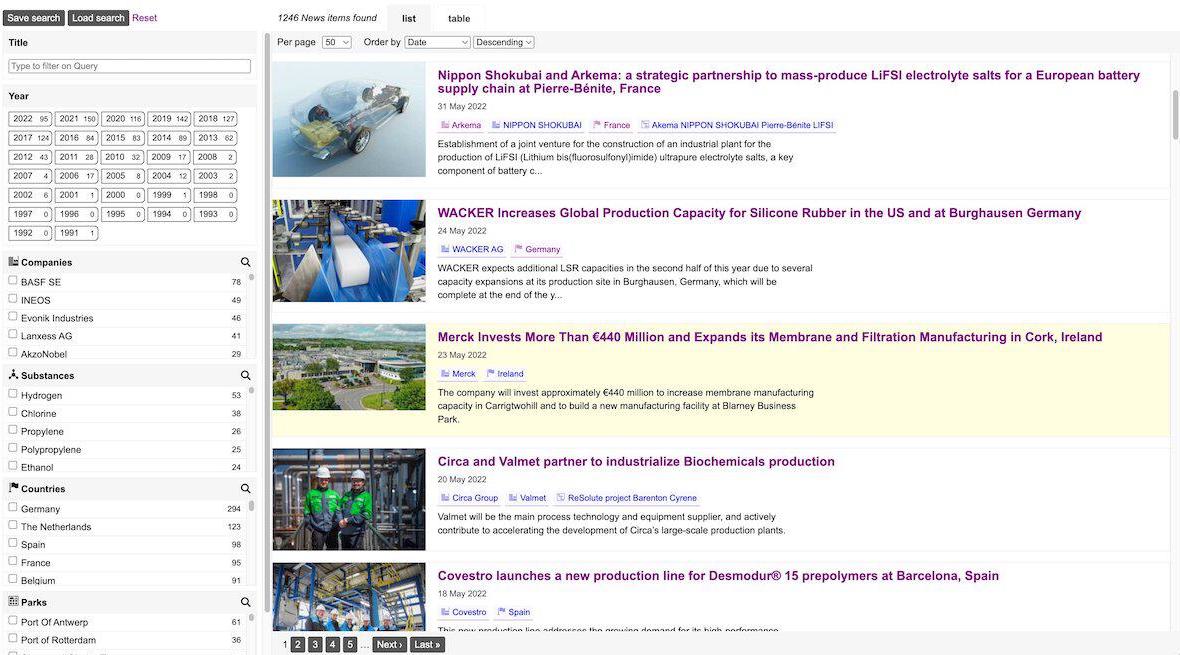
Across all of it:
People whose next decision depends on knowing what is actually being built.
Where capacity is being added for the substances you make or buy, who is adding it, and when it lands.
Which projects are approaching the phase where your scope is awarded, and who is already on them.
What a target or a competitor has committed to, how far each project has got, and the source for it.
What is under way in your area and around it, and how that compares with the clusters you measure against.
One subscription, everything above. Monthly or yearly, cancellable from your account.
Several people in your organisation? Contact us. Not ready yet? Start with chemXplore Weekly, free every Wednesday.
