
Topsoe and Partners Launch Dynamic Green Ammonia Plant in Denmark
- The plant received DKK 81 million in funding from the Danish Energy Technology Development and Demonstration Program.
- Annual production capacity is 5,000 tons of green ammonia, reducing CO2 emissions by 9,600 tons.
- The plant adapts to power fluctuations without hydrogen storage, optimizing cost-effectiveness.
- Ammonia is expected to play a critical role in decarbonizing industries like agriculture and shipping.
Introduction
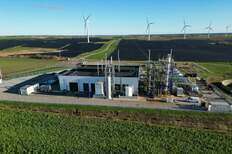
The world's first dynamic green ammonia plant has commenced operations in Ramme, Denmark, through a collaboration between Skovgaard Energy, Topsoe, and Vestas. This plant showcases the integration of renewable power directly with ammonia production, adapting to power fluctuations without hydrogen storage.
Production and Environmental Impact
The plant has an annual production capacity of 5,000 tons of green ammonia, which contributes to a reduction of 9,600 tons of CO2 emissions each year. This dynamic approach optimizes operations and reduces the need for costly storage solutions.
Funding and Technology
The project received DKK 81 million in funding from the Danish Energy Technology Development and Demonstration Program (EUDP). The plant utilizes renewable power from 50 MW of new solar panels and 12 MW of existing Vestas wind turbines.
Role of Ammonia
Ammonia is anticipated to play a crucial role in the global fuel mix, serving as a low-carbon fuel or e-fuel. It can be transported using existing infrastructure and has multiple applications, including decarbonizing industrial processes like agriculture, shipping, and steel production.
Source: Topsoe