
Veolia launches Grand Est battery metals recovery plant
- The site can process nearly 7,000 tonnes of black mass a year, equivalent to 20,000 tonnes of batteries.
- Its hydrometallurgy process is designed to recover more than 90% of the cobalt, nickel and copper in black mass.
- Veolia expects to process black mass from France, the UK and Switzerland at the facility.
- Nearly 700,000 tonnes of batteries are expected to be recycled in Europe within five years, representing over €1 billion in recoverable strategic metals.
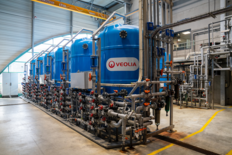
Facility and process
Veolia has launched a battery recycling project in France’s Grand Est region, using proprietary hydrometallurgy technology to process black mass from batteries. The site will handle nearly 7,000 tonnes of black mass annually, equivalent to 20,000 tonnes of batteries. It is designed to recover more than 90% of the cobalt, nickel and copper in the material. Feedstock is currently expected from France, the United Kingdom and Switzerland.
Markets and supply chain
The recovered metals are intended for European automotive, construction and defense markets. Veolia says nearly 700,000 tonnes of batteries are expected to be recycled in Europe within five years, representing more than €1 billion in recoverable metals. The company is also deploying battery dismantling projects in the United Kingdom, Belgium and Slovenia, complementary to the Grand Est processing facility.
European policy context
The project is intended to retain more battery materials within Europe, where black mass is currently exported to Asia. Veolia says a Europe-wide regulatory and economic framework is needed to support domestic supplies of strategic metals and facilities that can reintegrate recycled materials into manufacturing, including potential battery production.
Source: Veolia