
The Illusion of Overnight Success: What China's Aromatics Breakthrough Actually Tells Us
- Sinopec's Jiujiang aromatics complex (890,000 t/yr) reports 27% lower unit energy consumption and 50% improvement in low‑temperature heat utilization.
- RIPP has developed xylene isomerization catalysts since the 1980s; RAX‑3000 boosts adsorption +8% versus RAX‑2000A and enables ~20% higher reload throughput.
- RIPP attaches 25 patents to the package and had licensed a second‑generation high‑efficiency aromatics package by 2020, creating a domestic alternative to UOP licensing.
- Honeywell UOP's Parex PX process (since 1971) advanced through decades of adsorbent iteration, most recently with ADS‑47.
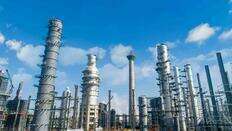
China recently announced that its "new generation green intelligent aromatics technology," deployed at Sinopec's 890,000 tonnes/year plant in Jiujiang, has achieved "international leading status." The claim deserves scrutiny, not because the achievement is fabricated, but because the framing obscures something more interesting than a breakthrough.
The first question any informed reader should ask: leading against which benchmark, as assessed by whom? The certifying body is CPCIF, China's own petroleum and chemical industry federation. "International leading" without a named external reference is a press release, not a performance claim. The real numbers: 27% reduction in unit energy consumption, 50% improvement in low-temperature heat utilization, are substantial. They didn't need embellishment.
Because behind those numbers lies a decades-long program of iterative material science that the announcement conveniently compresses into a single event. RIPP has been developing xylene isomerization catalysts since the 1980s, and its RAX adsorbent series shows the same generational logic: RAX-3000 improved on RAX-2000A by 8% in adsorption capacity and enabled 20% higher processing throughput on reload. By 2020, RIPP was already licensing what it called its second-generation high-efficiency aromatics package. The 25 patents now attached to this announcement are not the output of a sudden insight, they are the visible tip of an iterative iceberg.
This pattern is not uniquely Chinese. Honeywell UOP's Parex process, the global benchmark for simulated moving bed PX separation since 1971, followed identical logic: generations of adsorbent improvement, each incrementally better, culminating in ADS-47, described at launch as the largest step-change in Parex technology in over 40 years, which is another way of saying forty years of smaller steps preceded it. The iteration model is universal. What differs is the mechanism: UOP iterated through market pull, each licensed unit funding the next generation. RIPP iterated through state-backed deployment, with Sinopec's captive scale absorbing the cost of learning.
This is precisely what sustainable industrial development looks like in practice; not the celebrated first-of-a-kind, but the unglamorous nth-of-a-kind where cumulative iteration finally produces a step-change in energy performance. The parachute narrative, arriving with a box of patents and a press release, actively obscures this lesson.
And the commercial implications are real. For decades, Chinese refiners paid UOP licensing fees and bought UOP adsorbent. That era is over domestically. If Jiujiang's energy performance holds up under independent scrutiny, RIPP's package becomes a credible alternative for new-build aromatics complexes across Southeast Asia and the Middle East. The story here isn't China's innovation model. It's about who collects the licensing rents from the next wave of Asian petrochemical buildout. And whether the answer is still automatically Honeywell.