
EU Proposes Industrial Accelerator Act to Boost Manufacturing and Jobs
- The Industrial Accelerator Act aims to increase EU manufacturing's GDP share to 20% by 2035.
- Investments over €100 million in strategic sectors must create high-quality jobs and ensure 50% European employment.
- The Act targets sectors like steel, cement, aluminium, cars, and net-zero technologies, with potential extension to chemicals.
- A single digital permitting process will be established to expedite manufacturing projects.
Overview
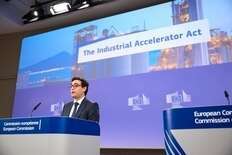
The European Commission has proposed the Industrial Accelerator Act (IAA) to boost EU manufacturing, create jobs, and support the adoption of low-carbon technologies. The Act aligns with the Draghi report's recommendations and aims to increase manufacturing's share of EU GDP to 20% by 2035.
Key Sectors and Requirements
The IAA introduces 'Made in EU' and low-carbon requirements for public procurement in strategic sectors such as steel, cement, aluminium, cars, and net-zero technologies. It may extend to other energy-intensive sectors like chemicals, enhancing European production capacities and demand for clean technologies.
Investment and Economic Security
For foreign direct investments exceeding €100 million in strategic sectors, the Act mandates high-quality job creation, technology transfer, and a minimum of 50% European employment. This aims to strengthen EU economic security and supply chain resilience.
Permitting and Manufacturing Clusters
The IAA simplifies permitting processes by introducing a single digital 'one-stop-shop' for industrial projects. It also promotes Industrial Acceleration Areas to foster clean manufacturing clusters, facilitating energy infrastructure investments and skills development.
Next Steps
The proposed Regulation will undergo negotiations by the European Parliament and the Council of the European Union before adoption and implementation.
Source: EIB