
Port of Rotterdam: Demand Uncertainty Delays Hydrogen Terminal Investments
- Investment in hydrogen terminals faces delays due to demand uncertainty and policy issues.
- Nine companies plan terminals for ammonia, methanol, liquid hydrogen, or LOHC.
- Terminal costs can reach several hundred million euros, with operations expected post-2030.
- Challenges include permit uncertainty, grid congestion, and lack of hinterland infrastructure.
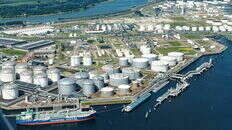
Investment Hesitation
The Port of Rotterdam Authority aims to boost hydrogen carrier imports, but investment in terminals is stalled. Companies are cautious due to financial and non-financial risks, primarily demand uncertainty for renewable energy carriers. This uncertainty is linked to unclear policies meant to stimulate demand.
Infrastructure Challenges
Power grid congestion and insufficient pipeline infrastructure are significant concerns. The market consultation revealed that at least nine companies are planning terminals for ammonia, methanol, liquid hydrogen, or LOHC, with potential on-site conversion into hydrogen.
Cost and Timeline
Building such terminals can cost several hundred million euros, prompting companies to seek assurance of investment recovery. Most companies anticipate their terminals will not be operational until after 2030.
Regulatory and Policy Issues
Additional uncertainties include permit issues, particularly regarding nitrogen deposits and unpredictable procedure timelines. The lack of infrastructure to the hinterland, such as the Delta Rhine Corridor to Germany, and unstable long-term climate policies further complicate investment decisions.
Addressing Risks
The Port of Rotterdam Authority, along with public and private partners, is prioritizing and addressing the risks identified by market participants.
Source: Port of Rotterdam