
Hycamite: Germany sets out €1.5bn hydrogen support package
- At least €1.5bn is earmarked for hydrogen projects under the 2027 Carbon Contracts for Difference round.
- Tenders will cover 2 GW of gas-fired capacity in 2027 and a further 2 GW between 2030 and 2032, with hydrogen operation required by 2040 and 2043, respectively.
- The federal government and German states plan to provide €4.2bn for hydrogen network development.
- Future offshore wind tenders may assess component carbon footprints; similar requirements are planned for public steel and cement procurement.
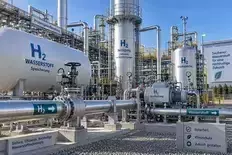
Funding and power generation
Germany plans to allocate at least €1.5 billion from 2027 to support industry’s transition to hydrogen, including hydrogen made by electrolysis and low-carbon hydrogen derived from natural gas. A new Carbon Contracts for Difference round will compensate companies for additional costs of adopting low-emission technologies for up to 15 years. The budget could increase if demand is strong. For the 2026 application round, projects will compete on emissions reductions per euro of public funding. Applicants using natural gas or biomass must show direct electrification is not technically feasible; hydrogen projects are exempt.
The government plans tenders for 2 GW of gas-fired capacity in 2027, with hydrogen operation required from 2040, and another 2 GW between 2030 and 2032, with conversion planned by 2043. These plants are intended to provide balancing and backup power as renewables are expected to supply 80% of electricity consumption by 2030.
Demand and infrastructure
Future offshore wind tenders will consider the carbon footprint of project components, and similar requirements are planned for public procurement of steel and cement. The measures aim to support demand for lower-carbon materials, including hydrogen-based steel.
More than 500 km of Germany’s hydrogen backbone network was operational by 2025, with a further 2,200 km under construction. The federal government and states plan to provide €4.2 billion for network development. Germany also plans to import hydrogen via European pipelines and by ship, including low-carbon hydrogen.
Regulation
Germany intends to advocate for a more pragmatic EU regulatory framework, arguing that stringent requirements raise costs during market development. This includes forthcoming revisions to the Renewable Fuels of Non-Biological Origin rules. Under EU definitions, low-carbon hydrogen must deliver at least 70% fewer greenhouse gas emissions than a fossil-based benchmark; calculations include methane leakage during production and transport.
Source: Hycamite