
X-Press Feeders completes Rotterdam’s first ethanol bunkering
- Eco Levant was bunkered in Rotterdam with separate ISCC EU‑certified loads: 90% biomethanol and 10% second‑generation ethanol, delivered by one inland bunker vessel and blended onboard.
- Methanol and ethanol were bunkered separately and mixed on the receiving vessel to form the operational fuel blend.
- Rotterdam (~10 million tonnes bunkered annually) is preparing infrastructure for multiple low‑carbon fuels and ran an ammonia bunkering pilot in 2025.
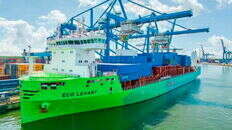
Ethanol bunkering event
The container ship Eco Levant was bunkered with ethanol in the port of Rotterdam, one of the first such operations globally and the first time a bunker vessel supplied ethanol to a seagoing vessel in Rotterdam.
Fuel blend
Post‑bunkering the ship operates on a fuel blend of 90% ISCC EU‑certified biomethanol and 10% ISCC EU‑certified second‑generation ethanol.
Supply and handling
Methanol and ethanol were delivered as separate batches by a single inland bunker vessel and were bunkered separately then blended onboard; methanol bunkering is already an established practice in shipping.
Port context
Rotterdam, which handles roughly 10 million tonnes of bunker fuel annually, is preparing infrastructure for multiple low‑carbon fuels and conducted an ammonia bunkering pilot in 2025; specialist firm METHANAVE was involved in the ethanol/methanol project.
Source: Port of Rotterdam