
DL E&C wins KRW550bn EPC for Dongjeju combined cycle power plant
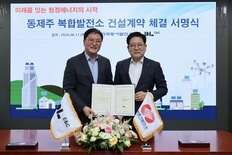
- KRW550 billion EPC contract to build a 150MW gas-fired combined cycle plant in Dongbok-ri, Gujwa-eup, Jeju.
- Completion and commissioning are scheduled for 2030.
- Plant will be hydrogen-ready with hydrogen-capable gas turbines and include a synchronous condenser to stabilise the island grid.
- DL E&C will use Advanced Work Packaging (AWP); CII/COAA research cites up to 25% productivity gain and up to 10% construction-cost reduction.
Project scope
DL E&C signed an EPC contract worth KRW550 billion to construct a 150MW gas-fired combined cycle power plant in Dongbok-ri, Gujwa-eup, Jeju, commissioned by Korea East-West Power. DL E&C will deliver the full EPC scope including commissioning, with completion scheduled for 2030.
Technical features
The plant design includes hydrogen-ready gas turbines to enable future conversion to hydrogen power generation and a synchronous condenser to supply or absorb reactive power for voltage stability. DL E&C emphasised its in-house basic design work, having analysed performance characteristics of the gas turbine, steam turbine and the heat recovery steam generator (HRSG) to optimise fuel efficiency across peak and partial-load operation.
Delivery approach
The project will implement Advanced Work Packaging (AWP), a digitalised project-management methodology that standardises and integrates engineering, procurement, construction and commissioning. CII and COAA research cited in the release notes AWP can improve productivity by up to 25% and reduce construction costs by up to 10%. DL E&C first applied AWP in Korea in 2021 on DL Chemical’s Yeosu No.2 Plant.
Context and strategy
Jeju’s power system faces island-specific logistics and weather constraints; DL E&C previously completed Unit 2 of the Jeju Internal Combustion Power Plant in 2009. The island’s renewable share is about 20%, creating intermittency challenges that the new plant will help mitigate. The project aligns with broader national shifts toward hydrogen and ammonia-based generation targeted under the government’s 11th Basic Plan for Long-Term Electricity Supply and Demand (43.9 TWh by 2038). DL E&C is also pursuing other low-carbon projects, including an SMR design agreement with X-energy and several major power-generation modernisations and builds.
Source: DL E&C