
C2X to deliver 3.6 million metric tons of carbon removals to Microsoft from Beaver Lake
- Beaver Lake will deliver 3.6 million engineered carbon removal units (CRUs) to Microsoft over 12 years.
- The plant is designed to capture ~1 million metric tonnes of CO2 annually and produce over 500,000 metric tonnes of bio‑methanol per year.
- Estimated project investment is about $2.5 billion, with up to 1,150 construction jobs and more than 600 direct and indirect jobs when operational.
- Construction expected to start in H2 2026 with operations commencing during 2029; CRUs to be issued on an ICROA‑endorsed registry with third‑party verification.
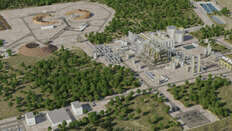
Agreement
C2X, through its Beaver Lake Renewable Energy subsidiary, signed a long‑term sale and purchase agreement with Microsoft for 3.6 million high‑quality engineered carbon removal units (CRUs) to be delivered over 12 years from the Beaver Lake project in Louisiana.
Project scope and outputs
The Beaver Lake bio‑methanol plant will convert sustainably sourced local forestry residues into bio‑methanol and biogenic CO2 for capture. At full scale the facility is designed to produce over 500,000 metric tonnes of bio‑methanol annually and capture and store around 1 million metric tonnes of CO2 each year.
Carbon accounting and registration
Each CRU represents one metric tonne of CO2 durably removed and permanently stored in secure geologic formations in Louisiana. All lifecycle emissions — including biomass sourcing, operations and downstream transport — will be accounted for and subtracted; carbon benefits will be allocated between bio‑methanol and CRUs to prevent double counting. The project will be registered and CRUs issued on an ICROA‑endorsed registry with independent third‑party verification, and will follow sustainable biomass sourcing practices aligned with EU RED III principles.
Finance, schedule and local impact
The project carries an estimated $2.5 billion total investment, is expected to create up to 1,150 construction jobs and over 600 direct and indirect jobs when operational, and aims to support the regional forestry industry and CO2 transport/sequestration investment. Following completion of engineering and development, construction is expected to start in the second half of 2026 with operations commencing during 2029.
Stakeholder comments
Brian Davis, CEO of C2X, described the project as combining bio‑methanol production for hard‑to‑abate sectors with permanent carbon removals and thanked Microsoft for its leadership. Phillip Goodman, Microsoft’s Director of Carbon Removal Portfolio, highlighted the project’s large‑scale removal potential, sustainable biomass sourcing, rigorous carbon accounting and community engagement.
Source: SunGas