
Toray develops polyester film with industry-leading low optical retardation
- Head-on optical retardation is 200 nm or less, about one-tenth that of conventionally produced films.
- A refined biaxial stretching process and proprietary multilayer structure reduce thickness-direction retardation and improve uniformity across film width.
- The film combines low retardation with low moisture permeability and resistance to repeated bending.
- Toray plans to develop the technology for mass production.
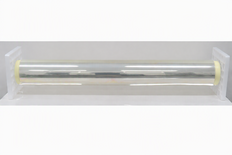
Lower retardation
Toray has developed a technology for biaxially oriented polyester film that reduces head-on optical retardation to 200 nanometers or less—about one-tenth the level of films made with conventional technology. It also lowers thickness-direction retardation and improves uniformity across the film width.
The technology combines refinements to the biaxial stretching process with a proprietary multilayer structure that includes a special low-retardation polyester layer. These changes are intended to suppress rainbow mottling when displays are viewed through polarized filters, regardless of viewing angle.
Potential applications
The film combines low retardation with low moisture permeability and resistance to repeated bending. Toray sees potential in displays requiring dimensional stability under changing humidity and durability under repeated flexing, as well as in components for sensors using polarized light. The company plans to develop the technology for mass production.
Source: Toray