
Toray develops ML materials-design tool to boost CFRP recyclability
- Toray developed an MI/ML materials-design technology to select thermosetting matrix resins that balance recyclability and mechanical performance for CFRP.
- The model increases prediction accuracy (coefficient of determination) by up to 25% versus conventional approaches.
- Resin formulations identified retained favorable decomposition and reuse characteristics after being formed into CFRP.
- Work was part of the SIP Phase 3 “Development of Circular Economy System” initiative and targets aircraft, automotive and general industrial CFRP applications, reducing candidate evaluations by thousands to tens of thousands.
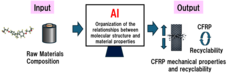
Overview
Toray has developed a materials-design technology that uses machine learning and materials informatics to identify thermosetting matrix resins that achieve both recyclability (ease of decomposition and reuse) and the mechanical performance required for carbon fiber reinforced plastics (CFRP). The technology is intended for use in aircraft, automotive and general industrial CFRP applications.
Model and validation
The approach systematically organizes and trains data on relationships between resin molecular structures and their recyclability and mechanical properties. Toray reports the model delivers up to 25% improved prediction accuracy (coefficient of determination) compared with conventional models. Resins selected by the model retained favorable decomposition and reuse characteristics after being formed into CFRP.
Development impact
By narrowing candidate materials early in the design process, the technology enables faster, application-tailored design studies and is expected to reduce the number of experimental and simulation evaluations by thousands to tens of thousands of candidates.
Programme support
Part of the development was carried out under the “Development of Circular Economy System” initiative within Phase 3 of Japan’s Cross-ministerial Strategic Innovation Promotion Program.
Source: Toray