
Sinopec Reports 2025 Results in Hong Kong
- 2025 results: operating revenue RMB2.78 trillion; profit attributable RMB32.476 billion; EPS RMB0.268; cash dividend RMB0.20/share and total distribution (including buybacks) 81%.
- Oil and gas: oil-and-gas equivalent 525.28 million barrels (up 1.9%), crude 255.75 million barrels, natural gas 14,566 billion cubic feet (up 4%).
- Refining and chemicals: crude processing 250 million tons; refined product 149 million tons; ethylene 15.28 million tons; chemical product sales 87.12 million tons; PX and chemical light oil at record highs; POE development and 60K mega-tow carbon fiber industrialized.
- Fuel and low-carbon: fuel oil sales 229 million tons; vehicle LNG sales +74%, charging/swapping volume +182%, significant hydrogen refueling growth, and largest low-sulfur marine fuel supplier.
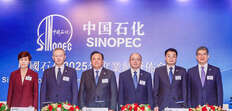
Financial results
Under IFRS Sinopec reported 2025 operating revenue RMB2.78 trillion, profit attributable to shareholders RMB32.476 billion, EPS RMB0.268; proposed cash dividend RMB0.20/share and total payout including buybacks reached 81% under Chinese GAAP.
Upstream production
Oil-and-gas equivalent output was 525.28 million barrels (▲1.9%); crude production 255.75 million barrels; natural gas 14.566 billion cubic feet (▲4%); progress reported in Bohai Bay shale oil, new Sichuan areas and offshore gas exploration, and the Shengli Jiyang shale oil demonstration zone.
Refining and chemicals
Annual crude processing 250 million tons and refined products 149 million tons; ethylene 15.28 million tons; chemical product sales 87.12 million tons (▲3.6%); PX, chemical light oil and POE outputs grew and 60K mega-tow carbon fiber reached industrial production.
Fuel sales and networks
Total fuel oil sales 229 million tons; vehicle LNG sales +74%, charging/swapping volume +182%, notable growth in hydrogen refueling; maintained leading position in low-sulfur marine fuel supply.
Innovation and digitalization
Nearly 10,000 patent applications with 5,768 authorizations; advances include continental fault-basin shale oil tech, heterogeneous composite flooding, seawater electrolysis hydrogen demonstration, 100kW iron-chromium flow battery, and deployment of large AI models and smart factories.
Plans for 2026
The company set six strategic priorities and six campaigns for 2026 focusing on resource security, market expansion, cost control, tech-industry integration, AI+ adoption, and ESG governance.
Source: Sinopec