
Siemens and Ucaneo to scale electrochemical Direct Air Capture
- Ucaneo targets annual removal of 0.5 gigatonnes of CO₂ by 2035.
- First industrial DAC plant in Berlin: 150 tCO₂/year nameplate; inauguration set for July 2, 2026; part of output to be geologically stored as Germany's first verified DAC+storage project.
- A follow-on commercial plant with roughly 10× the Berlin capacity is in development and slated to start construction next year.
- Siemens will supply Siemens Xcelerator solutions—process simulation, controllers, Simatic PCS neo, instrumentation and consulting—to create a standardized, modular automation template for global replication.
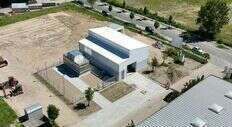
Partnership and scale-up objective
Siemens is the preferred automation and digitalization partner for Ucaneo, deploying the Siemens Xcelerator portfolio to scale an electrochemical Direct Air Capture (DAC) process from industrial pilot to commercial plants. The companies are creating a standardized, globally replicable automation platform to accelerate deployment by Ucaneo and its licensed operators. Ucaneo targets the annual capture of 0.5 gigatonnes of CO₂ by 2035.
First-of-a-kind DAC plant in Berlin
Ucaneo's electrochemical DAC, inspired by the human lung, removes CO₂ from ambient air and delivers >99.9% purity. The fully electrified process integrates with renewable power and responds to grid conditions. The first industrial plant in Berlin has a 150 tCO₂/year nameplate capacity, will be Germany's largest DAC on commissioning, and will be inaugurated on July 2, 2026. Part of the captured CO₂ will be permanently stored in geological formations, making it Germany's first verified DAC project combined with geological storage.
Automation and digital technology role
Siemens provides process automation, instrumentation, analytics, drive technology and digitalization. Process simulation software and controllers are already used at the pilot. Planned deployments include Simatic PCS neo and additional simulation tools to enable full virtual process validation before commissioning, reducing technical risk and safeguarding capital efficiency through a modular automation template.
Market context
Demand for industrial CO₂ is rising across sustainable aviation fuel, methanol and food and beverage uses. ReFuelEU mandates e-kerosene shares of 1.2% by 2030 and 35% by 2050. The EU Carbon Removal Certification Framework is being established to certify permanent carbon removal credits, creating a second commercial pathway for DAC alongside direct CO₂ sales.
Source: Siemens