
LANXESS Lewatit MDS TP 108 Removes >99.9% PFAS at Chemours
- Field trial at Chemours showed Lewatit MDS TP 108 removed >99.9% of fluorinated organic compounds, including short- and ultrashort-chain PFAS.
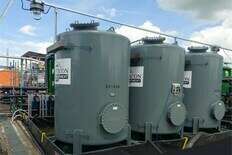
- Three-stage treatment: reverse osmosis to produce a PFAS-enriched concentrate, activated carbon to capture long-chain PFAS, then a three-vessel Lewatit MDS TP 108 cascade to remove short-chain PFAS (C2–C3 focus).
- Lewatit MDS TP 108, launched in 2024, uses monodisperse beads ~one-third smaller than conventional resins, delivering higher capacity, faster exchange kinetics and sustained performance at high flow rates.
- Plant supplied by Logisticon has operated at Chemours since mid-2025, and spent resin is destroyed by high-temperature incineration.
PFAS challenge
Short- and ultrashort-chain PFAS (two to seven carbon atoms) are persistent, bioaccumulative and technically difficult to remove because they adsorb poorly on activated carbon and often bind unstably in conventional ion-exchange resins, especially in the presence of competing anions.
Field performance
A Chemours field trial showed the Lewatit MDS TP 108 monodisperse resin removed more than 99.9% of fluorinated organic compounds from production wastewater; the treatment plant has been in regular operation since mid-2025 after a multi-month trial and was supplied by Logisticon.
Treatment configuration
The site uses a three-stage cascade: reverse osmosis produces a PFAS-depleted permeate and a PFAS-enriched concentrate; activated carbon captures long-chain PFAS to prevent fouling of the selective resin; a three-vessel Lewatit MDS TP 108 system (one primary, two polishing) targets short-chain PFAS, with focus on two- and three-carbon species.
Resin design and end‑of‑life
Launched in 2024, Lewatit MDS TP 108 features monodisperse beads about one-third smaller than conventional resins, yielding higher capacity and faster exchange kinetics that sustain performance at high flow rates; spent resin is destroyed by high-temperature incineration to eliminate retained PFAS.
Source: Lanxess