
ORLEN opens Marine Transshipment Terminal in Gdańsk
- Project cost nearly PLN 500 million and was delivered largely by Polish companies.
- 380-metre quay with two identical berths, each for vessels up to 10,000 dwt (max 130 m length, 17.6 m beam, 5.8 m draught).
- Fitted with four automated bidirectional marine loading arms operating at 10 bar and transfer capacity up to 500 m³/hour.
- Handles exports of Group I & II base oils, low-sulphur MGO and xylene, and imports of FAME, UCOME, ethanol, MTBE and ETBE.
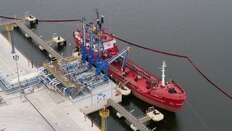
Project overview
ORLEN has opened a Marine Transshipment Terminal at its Gdańsk refinery on the Martwa Wisła River to enable direct transfers between the refinery and tankers, eliminating intermediate transport. The company says the facility strengthens fuel-logistics security, shortens the supply chain, increases operational flexibility and was delivered largely by Polish companies.
Terminal specifications
The facility includes a 380-metre quay with two identical berths capable of handling two vessels simultaneously. Each berth accommodates vessels up to 10,000 dwt with a maximum length of 130 metres, beam of 17.6 metres and draught of 5.8 metres. It is fitted with four automated, bidirectional marine loading arms operating at 10 bar with a transfer capacity of up to 500 m³ per hour.
Cargoes and early operations
The terminal will handle exports of Group I and Group II base oils, low-sulphur marine gas oil (MGO) and xylene. It will also receive imports of FAME and UCOME for biofuel production, ethanol, and the petrol additives MTBE and ETBE. The first vessels have already called, loading MGO and delivering FAME.
Volumes and expected impact
In its first year the terminal is expected to handle around 100 vessels and roughly 0.5 million tonnes of product. Ultimate annual throughput could reach approximately 1.8–2.0 million tonnes. ORLEN expects reduced logistics costs, greater supply flexibility, less reliance on road and rail transport and reduced dependence on external port facilities in Gdańsk and Gdynia.
Source: ORLEN