
Asahi Kasei's Thin-Film Hall Elements Earn IEEE Milestone Recognition
- AKM's thin-film Hall elements were commercialized in 1983.
- The technology uses a thin-film indium antimonide (InSb) layer.
- Over 50 billion Hall sensor units have been shipped worldwide.
- The sensors are used in brushless motors and energy-efficient equipment.
Introduction
Asahi Kasei Microdevices Corporation (AKM) has been recognized by the Institute of Electrical and Electronics Engineers (IEEE) for its commercialization of thin-film Hall elements, a significant milestone in electrical and electronic engineering.
Technological Advancements
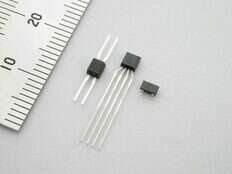
Launched in 1983, AKM's HW Series marked a breakthrough in the mass production of magnetic sensors using thin-film Hall elements. These sensors have become a standard technology in various electronic devices worldwide.
Innovations and Impact
Early thin-film Hall elements faced challenges in sensitivity and thermal stability. AKM addressed these by incorporating a thin-film indium antimonide (InSb) layer and a three-layer electrode structure, enhancing both sensitivity and durability. This innovation has led to the shipment of over 50 billion Hall sensor units globally.
Applications and Future Expansion
AKM's Hall elements are widely used in brushless motors, contributing to the miniaturization of IT infrastructure and consumer electronics. They also play a role in energy conservation through more efficient HVAC systems. AKM is expanding magnetic sensing into new areas like precision position detection and current sensing, improving smartphone cameras and electric vehicle efficiency.
Source: Asahi Kasei