
CATL unveils six battery innovations and integrated charge–swap network
- Naxtra sodium‑ion battery moved to GWh‑scale industrialisation with full mass production planned by end‑2026 after resolving extreme water control, hard‑carbon gas generation, aluminium‑foil adhesion and self‑forming anode issues.
- CATL targets 4,000 integrated charge–swap stations by end‑2026 across ~190 cities and 12 vertical×11 horizontal corridors, already has 1,470 stations in 99 cities, and aims for 100,000 shared replenishment facilities by end‑2028 with automaker partners including Changan, Chery, GAC, Seres, SAIC‑GM‑Wuling and BAIC.
- Key product specs: Shenxing 3rd‑gen equivalent 10C/peak 15C charging (10→80% 3m44s; 10→98% 6m27s; −30°C 20→98% ≈9min) with >90% capacity retention after 1,000 cycles; Qilin 3rd‑gen 280 Wh/kg (1,000 km), 625 kg pack, 3 MW peak; Qilin Condensed 350 Wh/kg (760 Wh/L) for ~1,500 km sedans; Freevoy gen‑2 230 Wh/kg, up to 600 km electric and 1.5 MW instantaneous power.
Overview
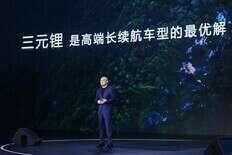
CATL presented six battery technologies and an integrated charge–swap architecture spanning LFP, NCM, silicon‑carbon, high‑nickel and sodium‑ion chemistries, targeting diverse mobility and energy scenarios.
Shenxing Superfast Charging
Third‑generation Shenxing targets heat control via reduced heat generation, faster thermal propagation and precision management; rated equivalent 10C (peak 15C), 10→80% in 3m44s, 10→98% in 6m27s, −30°C 20→98% ≈9min, and >90% capacity retention after 1,000 full cycles.
Qilin and Qilin Condensed
Qilin 3rd‑gen: 280 Wh/kg cells, 1,000 km range, 10C charge support, 625 kg pack and 3 MW peak power; Qilin Condensed: aviation‑grade design with 350 Wh/kg (760 Wh/L), ~1,500 km sedan range, titanium alloy case and a condensed (non‑liquid) system to mitigate leakage/combustion risks.
Freevoy Super Hybrid
Freevoy 2nd‑gen mixes LFP and NCM at particle level to reach 230 Wh/kg, enabling up to 500 km (LFP) and >600 km (NCM) pure electric range, 1.5 MW instantaneous power and retained 1.2 MW at 20% SOC; includes reinforced crash and waterproof protections.
Naxtra Sodium‑ion
Naxtra reached GWh‑scale industrialisation after solving four production bottlenecks—extreme water control, hard‑carbon gas generation, aluminium‑foil adhesion and self‑forming anode systems—and is slated for full mass production by end‑2026.
Integrated charge–swap network
A unified home/public/ battery‑swap architecture (Choco‑Swap/QIJI) combines Shenxing supercharging across stations, an 800V Choco‑Swap #26 battery (75 kWh initial), plans for 4,000 integrated stations by end‑2026 (1,470 existing), and a 100,000‑facility sharing target by end‑2028 with partners including Changan, Chery, GAC, Seres, SAIC‑GM‑Wuling and BAIC.
Source: CATL