
BIOWEG to build Europe’s largest bacterial cellulose plant in Elsdorf
- Construction begins Q4 2026; first commercial volumes expected in 2028 and capacity up to 10,000 tonnes/year.
- Series A extended to €18m (including Rabo Ventures); €10.3m EU non-dilutive grant and €2m other funding raise total to €35m.
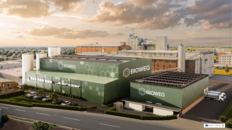
- Plant will be sited inside a sugar industrial complex to valorise molasses and other side streams and be fully automated.
- BIOWEG’s bacterial cellulose replaces intentionally added microplastics and can match performance at up to 70% lower dosage in some formulations.
Project and timeline
BIOWEG will build a first-of-a-kind bacterial cellulose plant in Elsdorf, North Rhine-Westphalia, with construction starting Q4 2026. The facility is designed for up to 10,000 tonnes per year, with first commercial volumes expected in 2028. The company’s Quakenbrück pilot will be upgraded and automated to at least 200 t/yr to supply commercial batches through 2027–2028 and serve as the automation blueprint.
Funding
The funding mix includes an €18 million Series A (extended from an earlier €16 million round with new investor Rabo Ventures), a €10.3 million non-dilutive EU grant under the EFRE/JTF Produktives.NRW competition, and about €2 million from other sources, bringing total funding committed to €35 million. BIOWEG has allocated roughly 60% of its total funding to the Elsdorf site.
Production model and feedstock
The plant will be integrated into a large sugar industrial complex to use molasses and other side streams as fermentation feedstock, reducing logistics emissions and operating costs. It is engineered for full automation, leveraging the sugar industry’s experience in cost‑efficient, high-automation operations.
Markets and regional impact
Bacterial cellulose is positioned as a biodegradable replacement for intentionally added microplastics across agriculture (fertiliser and seed coatings, extrusion aids) and personal/home care (rheology, texture, film-forming). In some formulations it delivers required functionality at up to 70% lower dosage than synthetics. The Elsdorf plant will create about 30 high‑tech jobs and supports regional industrial transition efforts in the Rheinische Revier.
Source: BIOWEG